
 Contacto
 Cómo comprar
Entrega
Guía de compras
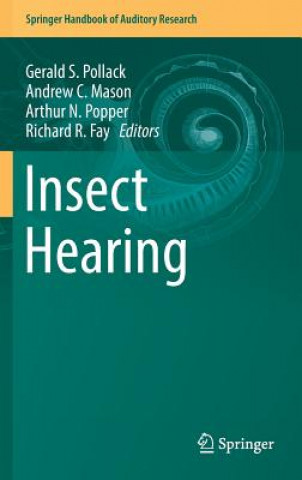
Insect Hearing
 Inglés
 276 b
276 b
Hasta 30 días para devoluciones
Clientes que también han comprado




 /
/
 Adobe ePub DRM
 59.49
€
59.49
€




 /
/
 Tapa blanda
55.09
€
Tapa blanda
55.09
€



 /
/
 CD de audio
14.19
€
CD de audio
14.19
€







 /
Tapa blanda
13.59
€
/
Tapa blanda
13.59
€
 /
Tapa blanda
36.79
€
/
Tapa blanda
36.79
€




Insect Hearing provides a broadly based view of the functions, mechanisms, and evolution of hearing in insects. With a single exception, the chapters focus on problems of hearing and their solutions, rather than being focused on particular taxa. The exception, hearing in Drosophila, is justified because, due to its ever growing toolbox of genetic and optical techniques, Drosophila is rapidly becoming one of the most important model systems in neurobiology, including the neurobiology of hearing.§§Auditory systems, whether insectan or vertebrate, must perform a number of basic tasks: capturing mechanical stimuli and transducing these into neural activity, representing the timing and frequency of sound signals, distinguishing between behaviorally relevant signals and other sounds and localizing sound sources. Studying how these are accomplished in insects offers a valuable comparative view that helps to reveal general principles of auditory function.


Sobre el libro
Inglés

Regale este libro hoy
Es fácil
1 Añadir al carrito y elegir Entregar como regalo en el checkout 2 Le enviaremos un vale 3 El libro llegará a la dirección del destinatarioTambién puede interesarle




 /
Tapa dura
112.79
€
/
Tapa dura
112.79
€




 /
Tapa dura
157.89
€
/
Tapa dura
157.89
€

 /
Tapa blanda
9.79
€
/
Tapa blanda
9.79
€






 /
Tapa blanda
47.39
€
/
Tapa blanda
47.39
€




¡Hola! Soy Libroamiko, tu asesor de libros.
¿Cómo puedo ayudarte?