Contacto
 Cómo comprar
Entrega
Guía de compras
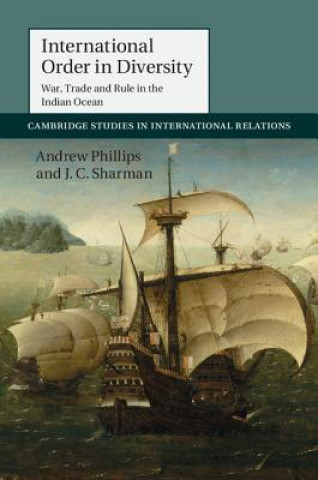
International Order in Diversity
 Inglés
 313 b
313 b
Hasta 30 días para devoluciones
Clientes que también han comprado





 /
/
 Tapa blanda
 30.99
€
30.99
€









International relations scholars typically expect political communities to resemble one another the more they are exposed to pressures of war, economic competition and the spread of hegemonic legitimacy standards. However, historically it is heterogeneity, not homogeneity, that has most often defined international systems. Examining the Indian Ocean region - the centre of early modern globalization - Andrew Phillips and J. C. Sharman explain how diverse international systems can emerge and endure. Divergent preferences for terrestrial versus maritime conquest, congruent traditions of heteronomy and shared strategies of localization were factors which enabled diverse actors including the Portuguese Estado da India, Dutch and English company sovereigns and mighty Asian empires to co-exist for centuries without converging on a common institutional form. Debunking the presumed relationship between interaction and homogenization, this book radically revises conventional thinking on the evolution of international systems, while deepening our understanding of a historically crucial but critically understudied world region.


Sobre el libro
Inglés

Regale este libro hoy
Es fácil
1 Añadir al carrito y elegir Entregar como regalo en el checkout 2 Le enviaremos un vale 3 El libro llegará a la dirección del destinatarioTambién puede interesarle
















 /
Tapa blanda
32.79
€
/
Tapa blanda
32.79
€