
 Contacto
 Cómo comprar
Entrega
Guía de compras
Introduction to Reliable and Secure Distributed Programming
 Inglés
 244 b
244 b
Hasta 30 días para devoluciones
Clientes que también han comprado



 /
/
 Tapa blanda
 24.89
€
24.89
€

 /
Tapa blanda
18.89
€
/
Tapa blanda
18.89
€




























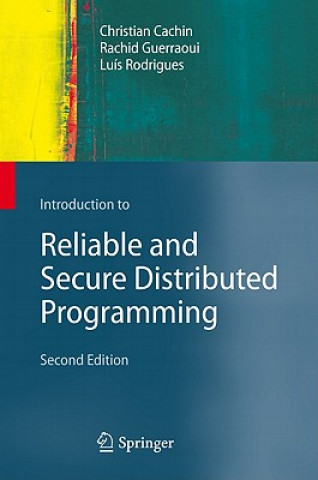
In modern computing a program is usually distributed among several processes. The fundamental challenge when developing reliable and secure distributed programs is to support the cooperation of processes required to execute a common task, even when some of these processes fail. Failures may range from crashes to adversarial attacks by malicious processes.Cachin, Guerraoui, and Rodrigues present an introductory description of fundamental distributed programming abstractions together with algorithms to implement them in distributed systems, where processes are subject to crashes and malicious attacks. The authors follow an incremental approach by first introducing basic abstractions in simple distributed environments, before moving to more sophisticated abstractions and more challenging environments. Each core chapter is devoted to one topic, covering reliable broadcast, shared memory, consensus, and extensions of consensus. For every topic, many exercises and their solutions enhance the understanding This book represents the second edition of "Introduction to Reliable Distributed Programming". Its scope has been extended to include security against malicious actions by non-cooperating processes. This important domain has become widely known under the name "Byzantine fault-tolerance".In modern computing a program is usually distributed among several processes. The fundamental challenge when developing reliable and secure distributed programs is to support the cooperation of processes required to execute a common task, even when some of these processes fail. Failures may range from crashes to adversarial attacks by malicious processes.Cachin, Guerraoui, and Rodrigues present an introductory description of fundamental distributed programming abstractions together with algorithms to implement them in distributed systems, where processes are subject to crashes and malicious attacks. The authors follow an incremental approach by first introducing basic abstractions in simple distributed environments, before moving to more sophisticated abstractions and more challenging environments. Each core chapter is devoted to one topic, covering reliable broadcast, shared memory, consensus, and extensions of consensus. For every topic, many exercises and their solutions enhance the understanding This book represents the second edition of "Introduction to Reliable Distributed Programming". Its scope has been extended to include security against malicious actions by non-cooperating processes. This important domain has become widely known under the name "Byzantine fault-tolerance".


Sobre el libro
Inglés

Regale este libro hoy
Es fácil
1 Añadir al carrito y elegir Entregar como regalo en el checkout 2 Le enviaremos un vale 3 El libro llegará a la dirección del destinatarioTambién puede interesarle




 /
Tapa blanda
17.29
€
/
Tapa blanda
17.29
€
 /
Tapa blanda
10.69
€
/
Tapa blanda
10.69
€
 /
Tapa blanda
17.89
€
/
Tapa blanda
17.89
€














 /
Tapa blanda
8.29
€
/
Tapa blanda
8.29
€

¡Hola! Soy Libroamiko, tu asesor de libros.
¿Cómo puedo ayudarte?