
 Contacto
 Cómo comprar
Entrega
Guía de compras
 Inglés
 35 b
35 b
 Próximamente
 Nuevo
Nuevo
Hasta 30 días para devoluciones

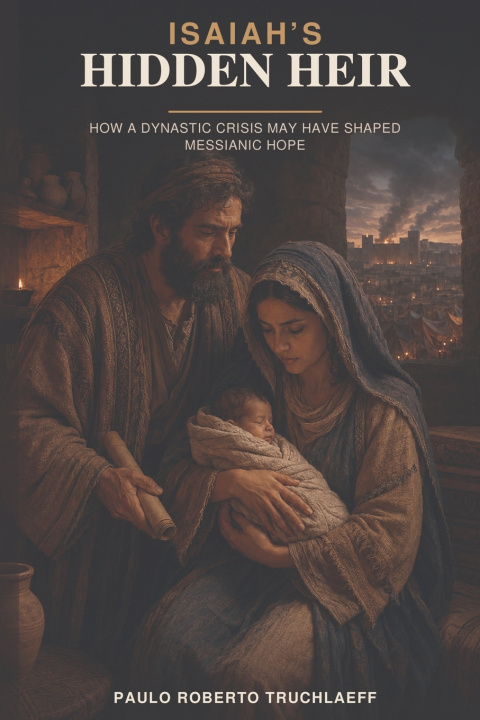
What if Isaiah's most mysterious prophecy was also a plan to save a dynasty?
Jerusalem, eighth century BCE. Two enemy kings intend to depose Ahaz and replace him, placing the House of David in its gravest crisis before the Babylonian conquest.
In Isaiah 7-9, a young woman conceives, witnesses authenticate a record before a child is born, the prophetess bears a son, and the imagery moves toward Galilee and a royal child. These details have usually been read as prophecy. But could they also preserve the outline of a political contingency?
Isaiah's Hidden Heir develops a provocative historical hypothesis: Isaiah may have concealed a plan to preserve a Davidic successor beneath prophetic language deliberately capable of more than one meaning.
Drawing on the Hebrew text, the Septuagint, the political crisis of eighth-century BCE Judah, and the later transformation of Davidic hope, Paulo Roberto Truchlaeff examines how a natural dynastic strategy could have survived as prophecy-and how prophecy could later become messianic expectation.
This is not a claim of proof, nor a devotional study. It is an investigation into how crisis becomes prophecy, how prophecy becomes hope, and how a man lost to history can leave an idea that enters eternity.


Sobre el libro
Inglés

Regale este libro hoy
Es fácil
1 Añadir al carrito y elegir Entregar como regalo en el checkout 2 Le enviaremos un vale 3 El libro llegará a la dirección del destinatario¡Hola! Soy Libroamiko, tu asesor de libros.
¿Cómo puedo ayudarte?