
 Contacto
 Cómo comprar
Entrega
Guía de compras
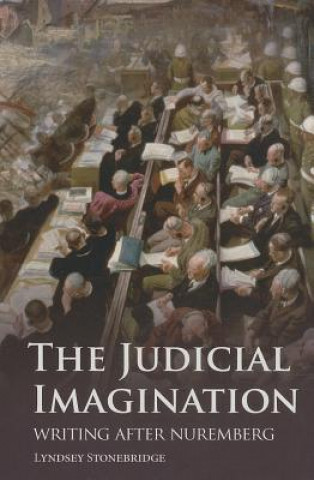
Judicial Imagination
 Inglés
 97 b
97 b
Hasta 30 días para devoluciones
Clientes que también han comprado





This book tells the story of the struggle to imagine new forms of justice after Nuremberg. Returning to the work of Hannah Arendt, Lyndsey Stonebridge traces the emergence of a critical aesthetics of judgment in a group of writers - often hard to place in the 'between' of modernism and contemporary writing - including Elizabeth Bowen, Muriel Spark, Iris Murdoch and Martha Gellhorn. From Nuremberg to the Eichmann trial, from the Paris Peace Conference to attempts to legislate for the world's newly stateless through the discourse of human rights, Stonebridge shows that these ethically-driven women intellectuals were drawn to the law because of its promise of historical justice, yet critical of its political blindness and suspicious of its moral claims. This book returns to the work of Hannah Arendt as the starting point for a new theorisation of the relation between law and trauma. It provides a new context for understanding the continuities between late modernism and postwar writing through a focus on justice and human rights. It offers a model of reading between history, law and literature which focuses on how matters of style and genre articulate moral, philosophical and political ambiguities and perplexities. It makes a significant contribution to the rapidly developing fields of literary-legal and human rights studies.


Sobre el libro
Inglés

Regale este libro hoy
Es fácil
1 Añadir al carrito y elegir Entregar como regalo en el checkout 2 Le enviaremos un vale 3 El libro llegará a la dirección del destinatarioTambién puede interesarle

 /
/
 Tapa blanda
 19.09
€
19.09
€
 /
Tapa blanda
43.29
€
/
Tapa blanda
43.29
€
¡Hola! Soy Libroamiko, tu asesor de libros.
¿Cómo puedo ayudarte?