Contacto
 Cómo comprar
Entrega
Guía de compras
 Inglés
 55 b
55 b
Política de devolución de 30 días
Clientes que también han comprado


 /
/
 Tapa blanda
 14.09
€
14.09
€

 /
Tapa blanda
12.29
€
/
Tapa blanda
12.29
€



 /
Tapa dura
17.89
€
/
Tapa dura
17.89
€

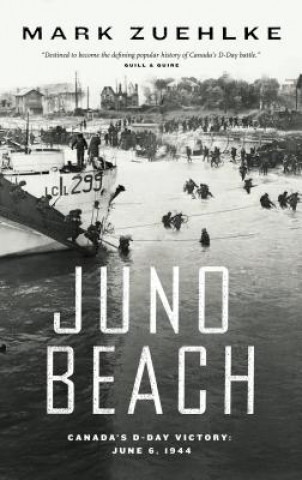
On June 6, 1944 the greatest armada in history stood off Normandy and the largest amphibious invasion ever began as 107,000 men aboard 6,000 ships pressed toward the coast. Among this number were 18,000 Canadians, who were to land on a five-mile long stretch of rocky ledges fronted by a wide expanse of sand. Code named Juno Beach. Here, sheltered inside concrete bunkers and deep trenches, hundreds of German soldiers waited to strike the first assault wave with some ninety 88-millimetre guns, fifty mortars, and four hundred machineguns. A four-foot-high sea wall ran across the breadth of the beach and extending from it into the surf itself were ranks of tangled barbed wire, tank and vessel obstacles, and a maze of mines. Of the five Allied forces landing that day, they were scheduled to be the last to reach the sand. Juno was also the most exposed beach, their day's objectives eleven miles inland were farther away than any others, and the opposition awaiting them was believed greater than that facing any other force. At battle's end one out of every six Canadians in the invasion force was either dead or wounded. Yet their grip on Juno Beach was firm.


Sobre el libro
Inglés

Regale este libro hoy
Es fácil
1 Añadir al carrito y elegir Entregar como regalo en el checkout 2 Le enviaremos un vale 3 El libro llegará a la dirección del destinatarioTambién puede interesarle


 /
Tapa blanda
121.69
€
/
Tapa blanda
121.69
€








 /
Tapa blanda
56.59
€
/
Tapa blanda
56.59
€