
 Contacto
 Cómo comprar
Entrega
Guía de compras
 Inglés
 116 b
116 b
Hasta 30 días para devoluciones
Clientes que también han comprado
















 /
/
 Tapa blanda
 17.29
€
17.29
€






 /
Tapa blanda
20.49
€
/
Tapa blanda
20.49
€







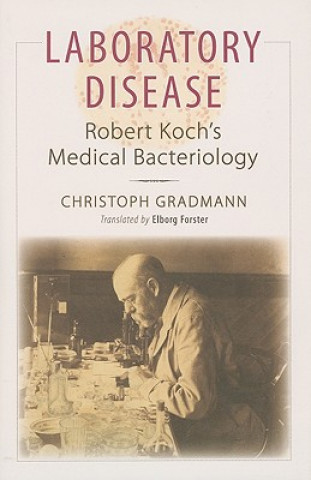
In the nineteenth century, the new field of medical bacteriology identified microorganisms and explained how they spread disease. This book interweaves the history of this discipline and the biography of one of its founders, Nobel Prize-winning German physician Robert Koch (1843-1910). Koch contributed to modern medicine by inventing or improving fundamental techniques such as bacterial staining, solid culture media, mass pure cultures, and the use of animal models. His discoveries, which dominated medical science at the turn of the last century, are epitomized in a set of rules named after him. "Koch's Postulates" are still invoked today in attempts to prove the causal involvement of pathogens in infectious diseases. In a double history, Christoph Gradmann narrates the development of a discipline and the biography of a scientist. Drawing on Koch's extensive laboratory notes, Gradmann details how Koch developed his scientific method and discovered the bacterial causes of anthrax, tuberculosis, and cholera. Koch tried to bring this knowledge to clinical medicine by developing medicines that would specifically target the bacterial pathogens he identified. And Koch's passion for personal travel developed into a career signature, as he became a pioneer in the study of tropical diseases. A fascinating look into Koch's personality and his experimental work in medical bacteriology, Laboratory Disease reveals both the biographical and the historical roots of our modern understanding of infectious diseases.


Sobre el libro
Inglés

Regale este libro hoy
Es fácil
1 Añadir al carrito y elegir Entregar como regalo en el checkout 2 Le enviaremos un vale 3 El libro llegará a la dirección del destinatarioTambién puede interesarle





 /
Tapa dura
176.99
€
/
Tapa dura
176.99
€
 /
Tapa blanda
17.89
€
/
Tapa blanda
17.89
€














¡Hola! Soy Libroamiko, tu asesor de libros.
¿Cómo puedo ayudarte?