Contacto
 Cómo comprar
Entrega
Guía de compras
 Inglés
 122 b
122 b
Política de devolución de 30 días
Clientes que también han comprado

 /
/
 Hoja
Hoja
 14.49
€
14.49
€




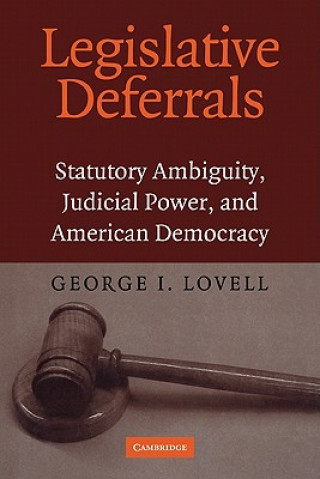
Why do unelected federal judges have so much power to make policy in the United States? Why were federal judges able to thwart apparent legislative victories won by labor organizations in the Lochner era? Most scholars who have addressed such questions assume that the answer lies in the judiciary's constitutionally guaranteed independence, and thus worry that insulated judges threaten democracy when they stray from baseline positions chosen by legislators. Originally published in 2003, this book argues for a fundamental shift in the way scholars think about judicial policy-making. Scholars need to notice that legislators also empower judges to make policy as a means of escaping accountability. This study of legislative deference to the courts offers a dramatic reinterpretation of the history of twentieth-century labor law and shows how attention to legislative deferrals can help scholars to address vexing questions about the consequences of judicial power in a democracy.


Sobre el libro
Inglés
Categorías