
 Contacto
 Cómo comprar
Entrega
Guía de compras
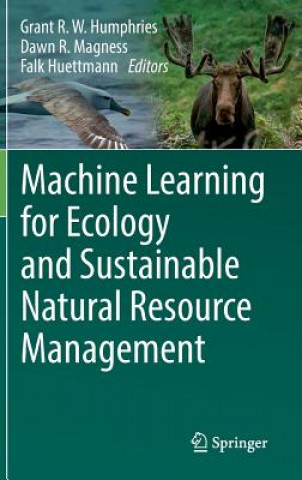
Machine Learning for Ecology and Sustainable Natural Resource Management
 Inglés
 634 b
634 b
Hasta 30 días para devoluciones
Clientes que también han comprado

 Tapa blanda
 80.89
€
80.89
€








 /
Tapa blanda
58.09
€
/
Tapa blanda
58.09
€





 /
/
 Calendario
64.59
€
Calendario
64.59
€











Ecologists and natural resource managers are charged with making complex management decisions in the face of a rapidly changing environment resulting from climate change, energy development, urban sprawl, invasive species and globalization. Advances in Geographic Information System (GIS) technology, digitization, online data availability, historic legacy datasets, remote sensors and the ability to collect data on animal movements via satellite and GPS have given rise to large, highly complex datasets. These datasets could be utilized for making critical management decisions, but are often "messy" and difficult to interpret. Machine learning is an emerging field in ecology that can provide critical tools to help resource managers synthesize information to better understand complex ecological systems. Machine Learning has a wide variety of powerful applications, with three general uses that are of particular interest to ecologists: (1) data exploration to gain system knowledge and generate new hypotheses, (2) predicting ecological patterns in space and time, and (3) pattern recognition for ecological sampling. Machine learning can be used to make predictive assessments even when relationships between variables are poorly understood. When traditional techniques fail to capture the relationship between variables, effective use of machine learning can unearth and capture previously unattainable insights into an ecosystem's complexity. Currently, many ecologists do not utilize machine learning as a part of the scientific process. This volume highlights how machine learning techniques can complement the traditional methodologies currently applied in this field.


Sobre el libro
Inglés

Regale este libro hoy
Es fácil
1 Añadir al carrito y elegir Entregar como regalo en el checkout 2 Le enviaremos un vale 3 El libro llegará a la dirección del destinatarioTambién puede interesarle




















¡Hola! Soy Libroamiko, tu asesor de libros.
¿Cómo puedo ayudarte?