
 Contacto
 Cómo comprar
Entrega
Guía de compras
 Inglés
 152 b
152 b
Hasta 30 días para devoluciones
Clientes que también han comprado









 /
/
 Tapa blanda
 24.79
€
24.79
€


 /
Tapa blanda
19.99
€
/
Tapa blanda
19.99
€



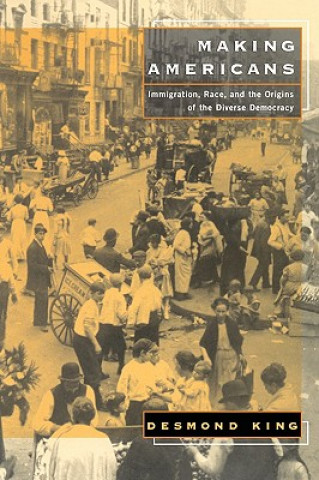
In the 19th century, virtually anyone could get into the United Sates. But by the 1920s, US immigration policy had become a finely filtered regime of selection. Desmond King looks at this dramatic shift, and the debates behind it, for what they reveal about the construction of an "American" identity. Specifically, the debates in the three decades leading up to 1929 were conceived in terms of desirable versus undesirable immigrants. This not only cemented judgements about specific European groups but reinforced prevailing biases against groups already present in the United States, particularly African Americans, whose inferior status and second-class citizenship - enshrined in Jim Crow laws and embedded in pseudo-scientific arguments about racial classifications - appear to have been consolidated in these decades, Although the values of different groups have always been recognised in the United States, King gives the most thorough account yet of how eugenic arguments were used to establish barriers and to favour an Anglo-Saxon conception of American identity, rejecting claims of other traditions. thus the immigration controversy emerges here as a significant precursor to recent multicultural debates. This book shows how the choices made about immigration policy in the 1920s played a fundamental role in shaping democracy and ideas about group rights in America.


Sobre el libro
Inglés

Regale este libro hoy
Es fácil
1 Añadir al carrito y elegir Entregar como regalo en el checkout 2 Le enviaremos un vale 3 El libro llegará a la dirección del destinatarioTambién puede interesarle











 /
Tapa blanda
6.49
€
/
Tapa blanda
6.49
€
 /
Tapa dura
127.69
€
/
Tapa dura
127.69
€






¡Hola! Soy Libroamiko, tu asesor de libros.
¿Cómo puedo ayudarte?