
 Contacto
 Cómo comprar
Entrega
Guía de compras
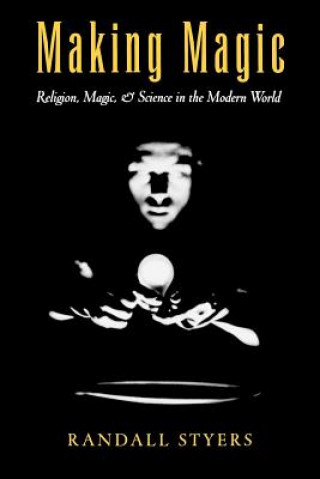
Making Magic
 Inglés
 107 b
107 b
Hasta 30 días para devoluciones
Clientes que también han comprado



 /
/
 Tapa blanda
 58.09
€
58.09
€







 /
Tapa blanda
10.69
€
/
Tapa blanda
10.69
€


Since the emergence of religious studies and the social sciences as academic disciplines, the idea of "magic" has played a major role in defining religion and in mediating the relation of religion to science. Across these disciplines, magic has regularly been configured as a definitively non-modern phenomenon, juxtaposed to the distinctly modern models of religion and science. As a category, however, magic has remained stubbornly amorphous. In Making Magic, Randall Styers seeks to account for the extraordinary vitality of scholarly discourse purporting to define and explain magic despite its failure to do just that. He argues that it can best be explained in light of the European and Euro-American drive to establish and secure their own identity as normative: rational-scientific, judicial-ethical, industrious, productive, and heterosexual. Magic has served to designate a form of alterity or deviance against which dominant Western notions of appropriate religious piety, legitimate scientific rationality, and orderly social relations are brought into relief.


Sobre el libro
Inglés

Regale este libro hoy
Es fácil
1 Añadir al carrito y elegir Entregar como regalo en el checkout 2 Le enviaremos un vale 3 El libro llegará a la dirección del destinatarioTambién puede interesarle
 /
Tapa blanda
62.19
€
/
Tapa blanda
62.19
€




 /
Tapa blanda
44.89
€
/
Tapa blanda
44.89
€














¡Hola! Soy Libroamiko, tu asesor de libros.
¿Cómo puedo ayudarte?