Contacto
 Cómo comprar
Entrega
Guía de compras
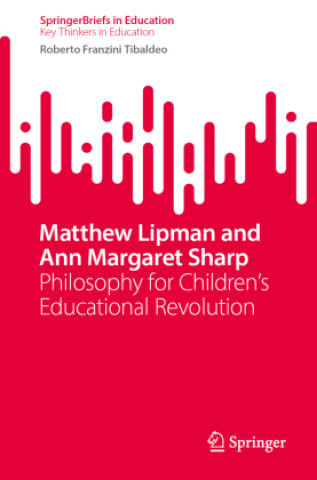
Matthew Lipman and Ann Margaret Sharp
Philosophy for Children's Educational Revolution
 Inglés
 152 b
152 b
Hasta 30 días para devoluciones
Clientes que también han comprado










This book explores the contribution to education contained in the theoretical work and teaching practice of Matthew Lipman (1923-2010) and Ann Margaret Sharp (1942-2010). Their long-lasting cooperation gave rise to the well-known "Philosophy for Children" (P4C) curriculum, which is nowadays globally widespread. P4C basically relies on the following innovations: firstly, the unprecedented connection between philosophy and childhood; secondly, the reframing of philosophy in practical, viz., not reductively theoretical terms; thirdly, the employment of philosophy to foster democracy and moral capabilities through the development of children's thoughtfulness and autonomous thinking, which would eventually result in empowering children's social abilities and increasing their self-defence against consumerism, propaganda, and manipulation; finally, the stand against a strictly cognitivist approach to education. More than just contextualizing these innovations in the coeval historical and social context, the author shows that P4C's revolutionary stance on education relies on the fruitfulness of Lipman and Sharp's intellectual cooperation and on their manifold abilities as researchers, teachers, trainers, communicators, motivators, and community-builders. The book analyzes their philosophical-educational vision and the scholastic curriculum they developed jointly; additionally, it provides a critical appraisal of P4C's achievements as well as of its future perspectives.


Sobre el libro
Inglés