Envío gratis a partir de 69,99 euros.

Entre a formar parte de una comunidad de amantes de los libros del mundo entero y acceda a un sinfín de ventajas.
Crear una cuenta gratis
Envío gratuito con Zásilkovna para compras superiores a 59.99 €
Mensajería SEUR 4.99 €
Mensajería GLS 7.99 €
Mensajería Correos 5.49 €
Mensajería DHL 5.49 €
Punto SEUR 3.99 €
 Contacto
 Cómo comprar
Ayuda
Entrega
Mensajería SEUR 4.99 €
Mensajería GLS 7.99 €
Mensajería Correos 5.49 €
Mensajería DHL 5.49 €
Punto SEUR 3.99 €
Envío gratuito con Zásilkovna para compras superiores a 59.99 €
Guía de compras
Mi cuenta
▸
Vacío :-(
0
Envío gratis a partir de 69,99 euros.
Modern Psychopharmacology in Psychiatry
A Practical Textbook of Psychiatric Medications, Treatment Selection, Adverse Effects, Monitoring, and Clinical Decision-Making
Idioma
 Inglés
Inglés
Libro
Tapa blanda
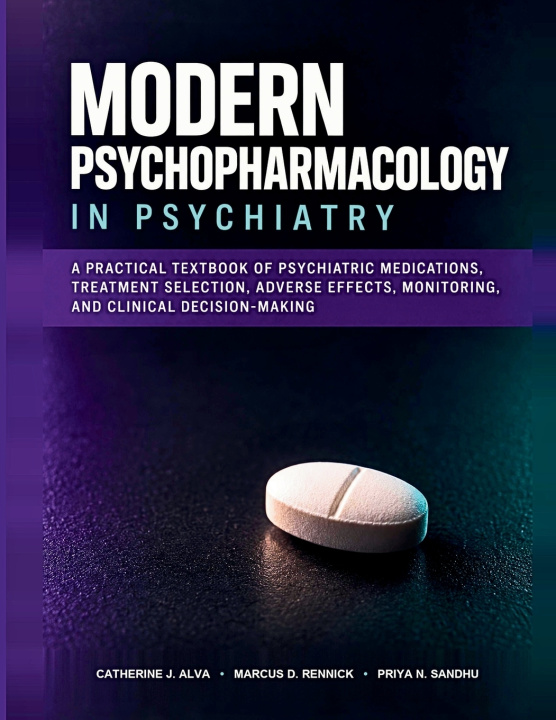
A man of thirty-one arrives labelled treatment-resistant after four antidepressants. Two were stoppe...
Descripción completa
Código Libristo: 53881294
?
 356 b
356 b
 Nuevo
Nuevo
356 b
Nuevo
145.39
€
Almacenamiento externo
Envío en 10-16 días
Hasta 30 días para devoluciones

A man of thirty-one arrives labelled treatment-resistant after four antidepressants. Two were stopped at three weeks for side effects, one never passed the starting dose, and the fourth he took irregularly. He has never had therapy.
Nothing has failed yet. This book teaches you to see that before you write the fifth prescription, and does the same for the other decisions that quietly decide how treatment turns out.
What you will be able to do
- Tell a failed drug from a failed trial. Establish the dose reached, the time spent at it, and what was actually swallowed, before anyone writes resistant.
- Explain the delay so your patient does not quit in week two. The drug acts within hours; the benefit comes from slower change. Saying so plainly is what keeps people on treatment.
- Switch agents without losing the patient mid-switch. Plan the cross-taper on half-lives and say in advance what the hardest week will feel like.
- Calculate a washout that is genuinely safe. From the longest-lived active moiety rather than the parent drug, counted from the last dose actually taken.
- Build monitoring that still happens six months later. Booked when you prescribe, owned by a named person, with the response to an abnormal result agreed up front.
- Separate serotonin toxicity from neuroleptic malignant syndrome by examining the patient, not the drug list.
- Reduce a regimen that has piled up without the withdrawal being mistaken for relapse.
- Find the words for the hard conversations. Model explanations for starting lithium, proposing a switch, prescribing in pregnancy, and answering someone who feels well and wants to stop.
How it teaches
Every chapter opens by correcting a belief that is widely held and not supported by the evidence, beginning with the idea that these drugs work by fixing a chemical imbalance, and closes on real situations taken to a decision, with the reasoning worked through at the back as thinking you can reuse.Dosing is given as range and principle, always with a direction to check current approved product information and your formulary. Where the evidence is weaker than common practice implies, the book says so.
Who it is for
Psychiatrists and trainees, general practitioners who prescribe psychiatric medication, mental health nurse practitioners, clinical pharmacists, physician associates, and advanced practitioners. Psychologists, social workers, occupational therapists, and nurses will find the material on adverse effects, adherence, and withdrawal directly usable.Educational use only. Verify all dosing against current approved product information before prescribing.
Actriz
&
Políglota
EWA KASP
para
Visualizar el vídeo


Libristo tiene la oferta más extensa de literatura en idiomas extranjeros. Por eso compran aquí sus libros.
Sobre el libro
Nombre y apellidos
Modern Psychopharmacology in Psychiatry
Idioma
Inglés
Inglés
Encuadernación
Libro - Tapa blanda
Fecha de publicación
2026
Número de páginas
514
EAN
9798173431158
Código Libristo
53881294
Editores
Independently published
Peso
1180
Dimensiones
216 x 280 x 26

Regale este libro hoy
Es fácil
1 Añadir al carrito y elegir Entregar como regalo en el checkout 2 Le enviaremos un vale 3 El libro llegará a la dirección del destinatario
Asesor de libros Libroamiko
Al usar este chat, te estás comunicando con inteligencia artificial generativa. Al usarlo, también aceptas el tratamiento de datos personales.
¡Hola! Soy Libroamiko, tu asesor de libros.
¿Cómo puedo ayudarte?
Hola, soy Libroamiko, ¿puedo ayudarte?