
 Contacto
 Cómo comprar
Entrega
Guía de compras
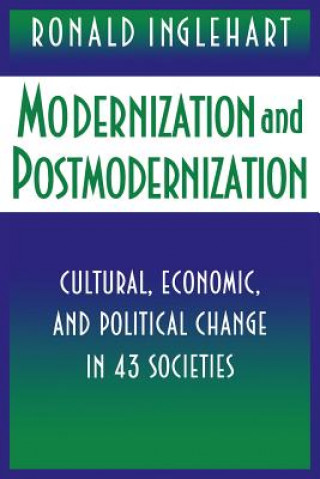
Modernization and Postmodernization
Cultural, Economic, and Political Change in 43 Societies
 Inglés
 166 b
166 b
Política de devolución de 30 días
Clientes que también han comprado



 /
/
 Tapa blanda
 35.49
€
35.49
€

 /
Tapa blanda
17.89
€
/
Tapa blanda
17.89
€



 /
Tapa blanda
28.69
€
/
Tapa blanda
28.69
€


Ronald Inglehart argues that economic development, cultural change, and political change go together in coherent and even, to some extent, predictable patterns. This is a controversial claim. It implies that some trajectories of socioeconomic change are more likely than others - and consequently that certain changes are foreseeable. Once a society has embarked on industrialization, for example, a whole syndrome of related changes, from mass mobilization to diminishing differences in gender roles, is likely to appear. These changes in worldviews seem to reflect changes in the economic and political environment, but they take place with a generational time lag and have considerable autonomy and momentum of their own. But industrialization is not the end of history. Advanced industrial society leads to a basic shift in values, de-emphasizing the instrumental rationality that characterized industrial society. Postmodern values then bring new societal changes, including democratic political institutions and the decline of state socialist regimes. To demonstrate the powerful links between belief systems and political and socioeconomic variables, this book draws on a unique database, the World Values Surveys. This database covers a broader range than ever before available for looking at the impact of mass publics on political and social life. It provides information from societies representing 70 percent of the world's population - from societies with per capita incomes as low as $300 per year to those with per capita incomes one hundred times greater and from long-established democracies with market economies to authoritarian states.


Sobre el libro
Inglés

Regale este libro hoy
Es fácil
1 Añadir al carrito y elegir Entregar como regalo en el checkout 2 Le enviaremos un vale 3 El libro llegará a la dirección del destinatarioTambién puede interesarle






















¡Hola! Soy Libroamiko, tu asesor de libros.
¿Cómo puedo ayudarte?