
 Contacto
 Cómo comprar
Entrega
Guía de compras
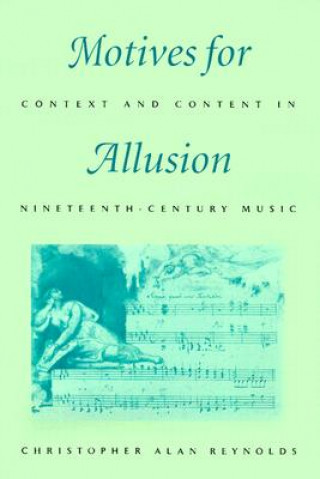
Motives for Allusion
 Inglés
 246 b
246 b
Hasta 30 días para devoluciones
Clientes que también han comprado





 /
/
 Tapa blanda
 26.69
€
26.69
€




 Tapa blanda
32.59
€
Tapa blanda
32.59
€






 /
Tapa blanda
14.19
€
/
Tapa blanda
14.19
€




When a critic pointed out to Brahms that the finale theme in his First Symphony was remarkably similar to the Ode to Joy theme in Beethoven's Ninth, he is said to have replied, "Yes indeed, and what's really remarkable is that every jackass notices this at once". Not every musical borrowing is quite so obvious but the listener who does perceive one is always left wondering, what does the similarity mean? Christopher Reynolds gives answers to that complex question. Reynolds identifies specific borrowings or allusions in a wide range of 19th-century music. He shows the kinds of things composers do with borrowed musical ideas and discusses why a composer would choose to deploy such allusions. A rich historical background for the practice emerges from this analysis. Musical borrowing touches directly on issues of central importance for 19th- and 20th-century composition: notions of creativity and originality, the constraints of tradition and innovation, musical symbolism and the listener's ear. Reynolds clarifies what it can mean when one piece of music invokes or refers to another.


Sobre el libro
Inglés
Categorías

Regale este libro hoy
Es fácil
1 Añadir al carrito y elegir Entregar como regalo en el checkout 2 Le enviaremos un vale 3 El libro llegará a la dirección del destinatarioTambién puede interesarle



 /
Tapa blanda
6.99
€
/
Tapa blanda
6.99
€






 /
Tapa blanda
32.79
€
/
Tapa blanda
32.79
€



 /
Tapa dura
34.89
€
/
Tapa dura
34.89
€








¡Hola! Soy Libroamiko, tu asesor de libros.
¿Cómo puedo ayudarte?