Contacto
 Cómo comprar
Entrega
Guía de compras
 Inglés
 69 b
69 b
Política de devolución de 30 días
Clientes que también han comprado




 /
/
 Tapa dura
 33.79
€
33.79
€













 /
Tapa blanda
13.49
€
/
Tapa blanda
13.49
€








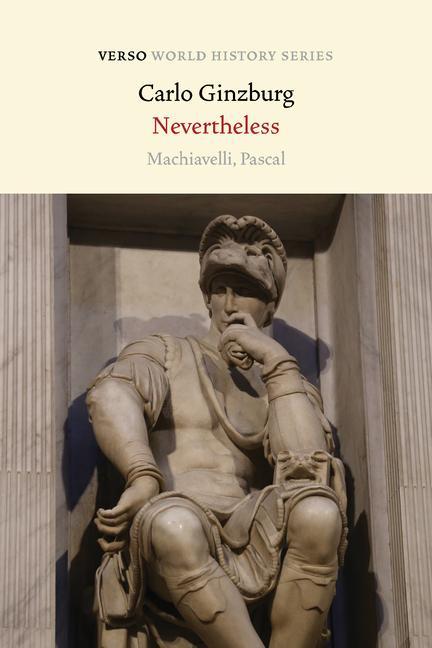
Nevertheless comprises essays on Machiavelli and on Pascal. The ambivalent connection between the two parts is embodied by the comma (,) in the subtitle: Machiavelli, Pascal. Is this comma a conjunction or a disjunction?
In fact, both. Ginzburg approaches Machiavelli’s work from the perspective of casuistry, or case-based ethical reasoning. For as Machiavelli indicated through his repeated use of the adverb nondimanco ("nevertheless"), there is an exception to every rule. Such a perspective may seem to echo the traditional image of Machiavelli as a cynical, "machiavellian" thinker. But a close analysis of Machiavelli the reader, as well as of the ways in which some of Machiavelli’s most perceptive readers read his work, throws a different light on Machiavelli the writer. The same hermeneutic strategy inspires the essays on the Provinciales, Pascal’s ferocious attack against Jesuitical casuistry.
Casuistry vs anti-casuistry; Machiavelli’s secular attitude towards religion vs Pascal’s deep religiosity. We are confronted, apparently, with two completely different worlds. But Pascal read Machiavelli, and reflected deeply upon his work. A belated, contemporary echo of this reading can unveil the complex relationship between Machiavelli and Pascal – their divergences as well as their unexpected convergences.


Sobre el libro
Inglés

Regale este libro hoy
Es fácil
1 Añadir al carrito y elegir Entregar como regalo en el checkout 2 Le enviaremos un vale 3 El libro llegará a la dirección del destinatarioTambién puede interesarle



 /
Tapa blanda
19.39
€
/
Tapa blanda
19.39
€


 /
Tapa blanda
19.39
€
/
Tapa blanda
19.39
€