
 Contacto
 Cómo comprar
Entrega
Guía de compras
 Inglés
 97 b
97 b
 Nuevo
Nuevo
Hasta 30 días para devoluciones

Nitrogen is one of the most abundant and indispensable elements on Earth, constituting nearly 78% of the Earth's atmosphere. Although colorless, odorless, tasteless, and chemically inert under normal conditions, nitrogen plays an extraordinary role in sustaining life, driving industrial development, and enabling technological innovation. From the growth of crops and production of fertilizers to advanced semiconductor manufacturing, pharmaceuticals, aerospace systems, cryogenic engineering, and environmental protection, nitrogen has become a fundamental resource that supports modern civilization.
The importance of nitrogen extends far beyond its presence in the atmosphere. It is an essential component of amino acids, proteins, nucleic acids (DNA and RNA), and chlorophyll, making it vital for all living organisms. In nature, the nitrogen cycle continuously transforms atmospheric nitrogen into biologically useful forms and returns it to the atmosphere, maintaining ecological balance. In industry, nitrogen serves as an inert gas for protecting sensitive materials, preventing oxidation, enhancing safety, preserving food quality, manufacturing electronic devices, and supporting countless engineering processes.
Over the past century, advancements in air separation technologies, cryogenic engineering, membrane separation, pressure swing adsorption, process automation, and digital control systems have revolutionized the production and utilization of nitrogen. Today, high-purity nitrogen is produced on an industrial scale to meet the demanding requirements of sectors such as chemical manufacturing, food and beverage processing, pharmaceuticals, healthcare, oil and gas, metallurgy, automotive engineering, electronics, aerospace, renewable energy, and scientific research.
As industries transition toward Industry 4.0, Industry 5.0, Artificial Intelligence (AI), Machine Learning, Industrial Internet of Things (IIoT), Digital Twins, and sustainable manufacturing, nitrogen systems are becoming increasingly intelligent, automated, and energy efficient. Modern nitrogen plants employ predictive maintenance, cloud-based monitoring, advanced analytics, robotics, and autonomous process optimization to improve reliability, reduce operating costs, and minimize environmental impact. These digital technologies are transforming traditional gas production facilities into smart industrial ecosystems capable of adapting to changing operational demands in real time.
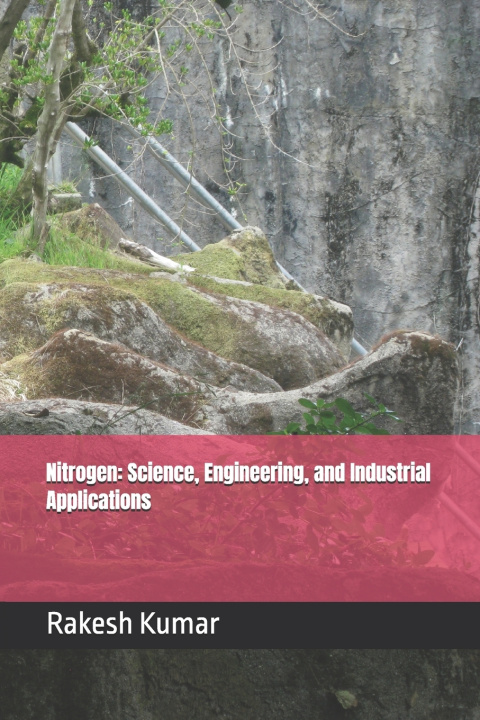
This book, Nitrogen: Science, Engineering, and Industrial Applications, provides a comprehensive exploration of nitrogen from scientific fundamentals to advanced industrial applications. It bridges theory and practice, making it valuable for students, researchers, practicing engineers, industrial professionals, educators, and decision-makers. The book explains the chemistry and physics of nitrogen, its production technologies, storage and distribution systems, cryogenic engineering principles, purification methods, instrumentation, automation, safety engineering, and regulatory requirements.
Beyond the fundamentals, the book examines nitrogen's extensive role across numerous industries, including chemical processing, fertilizer manufacturing, food packaging, pharmaceuticals, semiconductor fabrication, oil and gas operations, metal processing, healthcare, aerospace, agriculture, and environmental engineering. It also explores emerging technologies such as AI-based process optimization, predictive maintenance, robotics, digital twins, smart manufacturing, advanced data analytics, and sustainable nitrogen technologies that are reshaping industrial operations worldwide.


Sobre el libro
Inglés
Categorías

Regale este libro hoy
Es fácil
1 Añadir al carrito y elegir Entregar como regalo en el checkout 2 Le enviaremos un vale 3 El libro llegará a la dirección del destinatario¡Hola! Soy Libroamiko, tu asesor de libros.
¿Cómo puedo ayudarte?