
 Contacto
 Cómo comprar
Entrega
Guía de compras
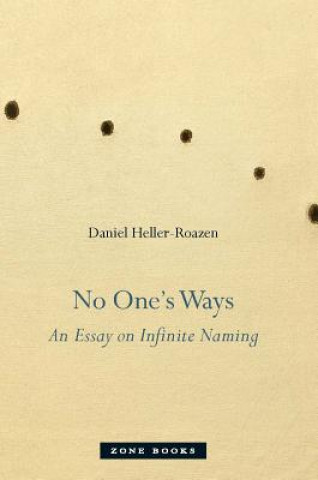
No One's Ways - An Essay on Infinite Naming
 Inglés
 115 b
115 b
Hasta 30 días para devoluciones
Clientes que también han comprado






 /
/
 Tapa blanda
 25.89
€
25.89
€










 /
Tapa blanda
11.49
€
/
Tapa blanda
11.49
€





 /
/
 Partituras
15.79
€
Partituras
15.79
€





Homer recounts how, trapped inside a monster's cave, with nothing but his wits to call upon, Ulysses once saved himself by twisting his name. He called himself Outis: "No One,ż or "Non-One,ż "No Man,ż or "Non-Man.ż The ploy was a success. He blinded his barbaric host and eluded him, becoming anonymous, for a while, even as he bore a name. Philosophers never forgot the lesson that the ancient hero taught. From Aristotle and his commentators in Greek, Arabic, Latin, and more modern languages, from the masters of the medieval schools to Kant and his many successors, thinkers have exploited the possibilities of adding "non-ż to the names of man. Aristotle is the first to write of "indefiniteż or "infiniteż names, his example being "non-man.ż Kant turns to such terms in his theory of the infinite judgment, illustrated by the sentence, "The soul is non-mortal.ż Such statements play major roles in the philosophies of Maimon, Fichte, Schelling, Hegel, and Hermann Cohen. They are profoundly reinterpreted in the twentieth century by thinkers as diverse as Carnap and Heidegger.


Sobre el libro
Inglés
Categorías

Regale este libro hoy
Es fácil
1 Añadir al carrito y elegir Entregar como regalo en el checkout 2 Le enviaremos un vale 3 El libro llegará a la dirección del destinatarioTambién puede interesarle



 /
Tapa blanda
8.39
€
/
Tapa blanda
8.39
€




 /
Tapa blanda
25.69
€
/
Tapa blanda
25.69
€
 /
Tapa blanda
80.69
€
/
Tapa blanda
80.69
€


 /
Tapa dura
36.89
€
/
Tapa dura
36.89
€

 /
Tapa dura
28.59
€
/
Tapa dura
28.59
€










¡Hola! Soy Libroamiko, tu asesor de libros.
¿Cómo puedo ayudarte?