
 Contacto
 Cómo comprar
Entrega
Guía de compras
 Inglés
 187 b
187 b
Hasta 30 días para devoluciones
Clientes que también han comprado

 /
/
 Tapa blanda
 15.49
€
15.49
€









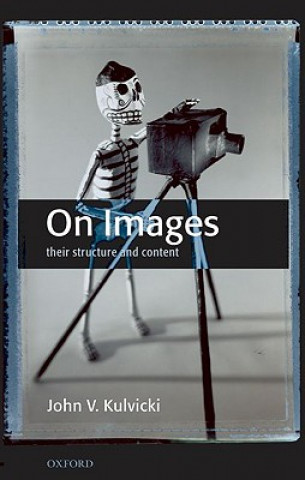
Whether it was the demands of life, leisure, or a combination of both that forced our hands, we have developed a myriad of artefacts--maps, notes, descriptions, diagrams, flow-charts, photographs, paintings, and prints--that stand for other things. Most agree that images and their close relatives are special because, in some sense, they look like what they are about. This simple claim is the starting point for most philosophical investigations into the nature of depiction. On Images, by contrast, argues that what it is to be a picture does not fundamentally concern how such representations can be perceived. What matters is not how we perceive representations but how they relate to one another. This kind of approach, first championed by Nelson Goodman in his Languages of Art, has not found many supporters, in part because of weaknesses with Goodman's account. On Images shows that a properly crafted structural account of pictures has many advantages over the perceptual accounts that dominate the literature on this topic. In particular, it explains the close relationship between pictures, diagrams, graphs and other kinds of non-linguistic representation. Kulvicki undermines the claim that pictures are essentially visual by showing how many kinds of non-visual representations, including audio recordings and tactile line drawings, are genuinely pictorial. Part Two shows that the structural account of depiction can help to explain why pictures seem so perceptually special, rather than taking that fact for granted. Based on these results, Part Three provides a new account of pictorial realism.


Sobre el libro
Inglés

Regale este libro hoy
Es fácil
1 Añadir al carrito y elegir Entregar como regalo en el checkout 2 Le enviaremos un vale 3 El libro llegará a la dirección del destinatarioTambién puede interesarle







¡Hola! Soy Libroamiko, tu asesor de libros.
¿Cómo puedo ayudarte?