
 Contacto
 Cómo comprar
Entrega
Guía de compras
Os Organoosmium Compounds
 Inglés
 161 b
161 b
Hasta 30 días para devoluciones
Clientes que también han comprado








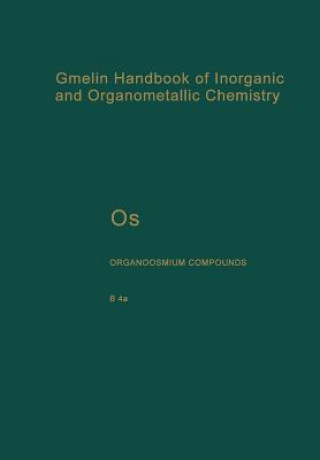
The GmeLin series "Organometallic Compounds" comprises compounds containing at least one carbon-to-metal bond (except cyano compounds, which are considered inorganic). It includes all information in scientific journals, but patents, conference reports, and disserta tions generally were not reviewed. The volumes published so far are listed on p. V/' Organometallic compounds are classified according to their nuclearity and the bonding mode of the organic ligands nL. Nuclearity means the number of atoms of the title metal in the formula unit disregarding any additional metals that may be present. The term nL designates a ligand bonded by n carbon atoms to one or different atoms of the title metal. As usual, a-bonded 1 L ligands are designated by R. Inorganic ligands (Le., ligands bonded exclusively by elements other than carbon) are generally designated by 0 or X. 0 means donor ligands such as pyridine or phosphanes; m-electron donors are specified by mO. X is reserved for negatively charged ligands or other one-electron donors such as halogens or SnR ; bridging X ligands may donate one 3 2 2 2 (~-H), three (~-Cl, ~-OR), or five (~3-1) electrons. Terms such as lL_ 0, 20-X, or 20_ 0_ 0 may be used for multidentate ligands. Heterometals are often designated by M, and bridging elements, bridging groups, or nonmetallic cluster constituents by E. The symbols 1] and ~ follow the IUPAC nomenclature.


Sobre el libro
Inglés
Categorías

Regale este libro hoy
Es fácil
1 Añadir al carrito y elegir Entregar como regalo en el checkout 2 Le enviaremos un vale 3 El libro llegará a la dirección del destinatarioTambién puede interesarle

 /
/
 Tapa blanda
 10.29
€
10.29
€




¡Hola! Soy Libroamiko, tu asesor de libros.
¿Cómo puedo ayudarte?