
 Contacto
 Cómo comprar
Entrega
Guía de compras
 Inglés
 187 b
187 b
Hasta 30 días para devoluciones
Clientes que también han comprado

























 /
/
 Tapa blanda
 17.89
€
17.89
€


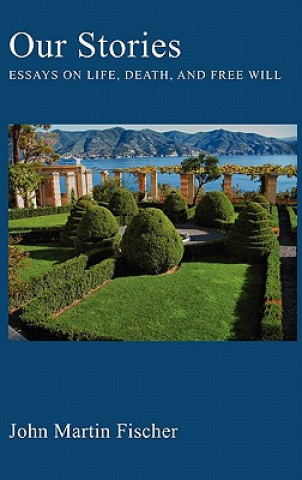
In this collection of essays on the metaphysical issues pertaining to death, the meaning of life, and freedom of the will, John Martin Fischer argues (against the Epicureans) that death can be a bad thing for the individual who dies. He defends the claim that something can be a bad thing-a misfortune-for an individual, even if he never experiences it as bad (and even if he does not any longer exist). Fischer also defends the commonsense asymmetry in our attitudes toward death and prenatal nonexistence: we are indifferent to the time before we are born, but we regret that we do not live longer. Further, Fischer argues (against the immortality curmudgeons, such as Heidegger and Bernard Williams), that immortal life could be desirable, and shows how the defense of the (possible) badness of death and the (possible) goodness of immortality exhibit a similar structure; on Fischer's view, the badness of death and the goodness of life can be represented on spectra that display certain continuities. Building on Fischer's previous book, My Way a major aim of this volume is to show important connections between issues relating to life and death and issues relating to free will. More specifically, Fischer argues that we endow our lives with a certain distinctive kind of meaning-an irreducible narrative dimension of value-by exhibiting free will. Thus, in acting freely, we transform our lives so that our stories matter.


Sobre el libro
Inglés

Regale este libro hoy
Es fácil
1 Añadir al carrito y elegir Entregar como regalo en el checkout 2 Le enviaremos un vale 3 El libro llegará a la dirección del destinatarioTambién puede interesarle















 /
Tapa blanda
184.09
€
/
Tapa blanda
184.09
€








¡Hola! Soy Libroamiko, tu asesor de libros.
¿Cómo puedo ayudarte?