
 Contacto
 Cómo comprar
Entrega
Guía de compras
 Inglés
 209 b
209 b
Política de devolución de 30 días
Clientes que también han comprado










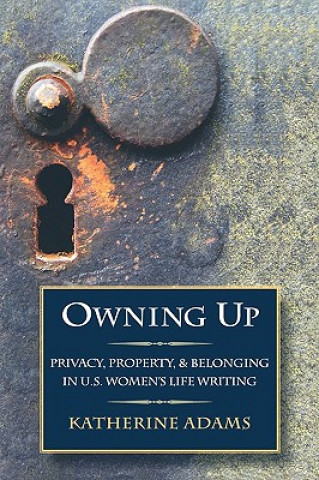
Owning Up argues that from its beginning the U.S. discourse on privacy has been couched in terms of violation and dispossession, so that even as nineteenth-century Americans came to regard privacy as a natural right, and to identify it with sacred ideals of democratic freedom and individuality, they also understood it as under threat or erasure. Using biographical and autobiographical writing as her primary archive, Adams traces the public narrative of imperiled privacy across five centuries. Her analyses begin with the premise that nineteenth-century conceptions of privacy became meaningful only in negative relation to the encroaching forces of market capitalism and commodification. Where previous studies treat privacy as a stable category whose defining features are middle-class domesticity and femininity, Owning Up contends that privacy is an empty category that lacks fixed content and requires constant re-articulation via panic narratives in which gender always operates in intersection with race. Chapters look at how the discourse of imperiled privacy develops in conjunction with Romantic idealism and antebellum reform, racial reconstruction and the ethic of self-right, and Social Darwinist laissez faire, and culminates at the end of the century in calls for legislation to protect the American individual's "right to be let alone".


Sobre el libro
Inglés
Categorías

Regale este libro hoy
Es fácil
1 Añadir al carrito y elegir Entregar como regalo en el checkout 2 Le enviaremos un vale 3 El libro llegará a la dirección del destinatarioTambién puede interesarle


 /
/
 Tapa blanda
 67.79
€
67.79
€











 /
Tapa blanda
252.49
€
/
Tapa blanda
252.49
€








¡Hola! Soy Libroamiko, tu asesor de libros.
¿Cómo puedo ayudarte?