
 Contacto
 Cómo comprar
Entrega
Guía de compras
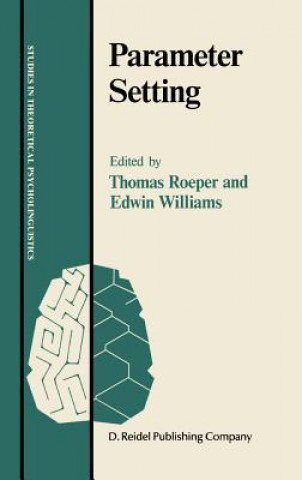
Parameter Setting
 Inglés
 444 b
444 b
Política de devolución de 30 días
Clientes que también han comprado





 /
/
 Adobe ePub DRM
 49.19
€
49.19
€



 /
/
 Tapa blanda
30.59
€
Tapa blanda
30.59
€





In May 1985 the University of Massachusetts held the first conference on the parameter setting model of grammar and acquisition. The conference was conceived in the belief that there is a new possibility of tightly connecting grammatical studies and language acquisition studies, and that this new possibility has grown out of the new generation of ideas about the relation of Universal Grammar to the grammar of particular languages. The papers in this volume are all concerned in one way or another with the 'parametric' model of grammar, and with its role in explaining the acquisition of language. Before summarizing the accompanying papers, I would like to sketch the intellectual background of these new ideas. It has long been the acknowledged goal of grammatical theorists to explicate the relation between the experience of the child and the knowledge of the adult. Somehow, the child selects a unique grammar (by assumption) compatible with a random partially unreliable sample of some language. In the earliest work in generative grammar, starting with Chomsky's Aspects, and extending to such works as Jackendoffs Lexicalist Syntax (1977), the model of this account was the formal evaluation metric, accompanied by a general rule writing system. The model of acquisition was the following: the child composed a grammar by writing rules in the rule writing system, under the constraint that the rules must be compatible with the data, and that the grammar must be the one most highly valued by the evaluation metric.


Sobre el libro
Inglés

Regale este libro hoy
Es fácil
1 Añadir al carrito y elegir Entregar como regalo en el checkout 2 Le enviaremos un vale 3 El libro llegará a la dirección del destinatarioTambién puede interesarle










 /
Tapa dura
62.89
€
/
Tapa dura
62.89
€




 /
Tapa dura
359.29
€
/
Tapa dura
359.29
€







¡Hola! Soy Libroamiko, tu asesor de libros.
¿Cómo puedo ayudarte?