
 Contacto
 Cómo comprar
Entrega
Guía de compras
 Inglés
 142 b
142 b
Hasta 30 días para devoluciones
Clientes que también han comprado






















 /
/
 Libro de concertinas
 11.39
€
11.39
€
 /
Tapa blanda
47.29
€
/
Tapa blanda
47.29
€











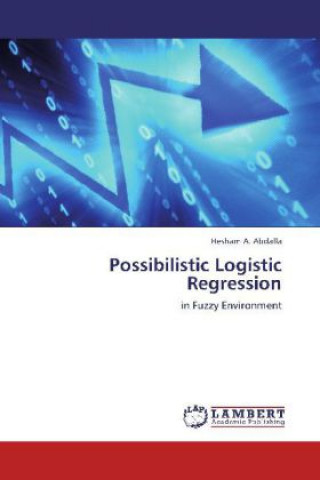
Parameter estimation for logistic regression is usually based on maximizing the likelihood function. For large well-balanced datasets ML estimation is a satisfactory approach. Unfortunately, ML may fail completely or at least produce poor results in terms of estimated probabilities and confidence intervals of parameters, specially for small datasets. This study extends logistic regression model to fuzzy logistic regression model by suggesting a new approach based on fuzzy concepts to estimate the model parameters. This study produces three proposed mathematical models with different objective functions. The first is formulated as a bi-objective programming model. The second is formulated using a goal programming approach, while the third is a mathematical programming model which minimizes the total spread of the estimated probabilities of the logistic model. The proposed models are evaluated and their results are compared to ML results through a Monte Carlo simulation study. The results are analyzed and summarized to conclude the following: The proposed models outperform ML approach for small size data sets with respect to the similarity measure as goodness of fit index.


Sobre el libro
Inglés
Categorías

Regale este libro hoy
Es fácil
1 Añadir al carrito y elegir Entregar como regalo en el checkout 2 Le enviaremos un vale 3 El libro llegará a la dirección del destinatarioTambién puede interesarle


 /
Tapa blanda
45.89
€
/
Tapa blanda
45.89
€








 /
Tapa blanda
169.09
€
/
Tapa blanda
169.09
€
 /
Tapa blanda
52.99
€
/
Tapa blanda
52.99
€









 /
Tapa blanda
67.49
€
/
Tapa blanda
67.49
€