
 Contacto
 Cómo comprar
Entrega
Guía de compras
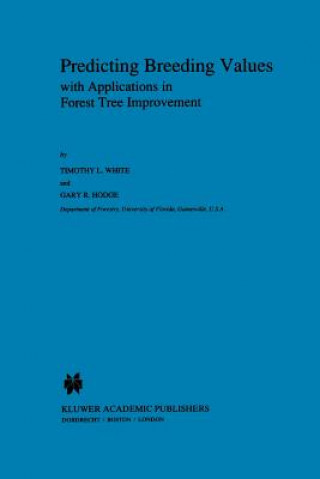
Predicting Breeding Values with Applications in Forest Tree Improvement
 Inglés
 573 b
573 b
Hasta 30 días para devoluciones
Clientes que también han comprado





In most breeding programs of plant and animal species, genetic data (such as data from field progeny tests) are used to rank parents and help choose candidates for selection. In general, all selection processes first rank the candidates using some function of the observed data and then choose as the selected portion those candidates with the largest (or smallest) values of that function. To make maximum progress from selection, it is necessary to use a function of the data that results in the candidates being ranked as closely as possible to the true (but always unknown) ranking. Very often the observed data on various candidates are messy and unbalanced and this complicates the process of developing precise and accurate rankings. For example, for any given candidate, there may be data on that candidate and its siblings growing in several field tests of different ages. Also, there may be performance data on siblings, ancestors or other relatives from greenhouse, laboratory or other field tests. In addition, data on different candidates may differ drastically in terms of quality and quantity available and may come from varied relatives. Genetic improvement programs which make most effective use of these varied, messy, unbalanced and ancestral data will maximize progress from all stages of selection. In this regard, there are two analytical techniques, best linear prediction (BLP) and best linear unbiased prediction (BLUP), which are quite well-suited to predicting genetic values from a wide variety of sources, ages, qualities and quantities of data.


Sobre el libro
Inglés

Regale este libro hoy
Es fácil
1 Añadir al carrito y elegir Entregar como regalo en el checkout 2 Le enviaremos un vale 3 El libro llegará a la dirección del destinatarioTambién puede interesarle





 /
/
 Tapa blanda
 25.09
€
25.09
€



¡Hola! Soy Libroamiko, tu asesor de libros.
¿Cómo puedo ayudarte?