
 Contacto
 Cómo comprar
Entrega
Guía de compras
 Inglés
 174 b
174 b
Política de devolución de 30 días
Clientes que también han comprado







 /
/
 Tapa dura
 18.19
€
18.19
€



 /
/
 Adobe ePub DRM
4.59
€
Adobe ePub DRM
4.59
€









 /
Tapa blanda
170.69
€
/
Tapa blanda
170.69
€










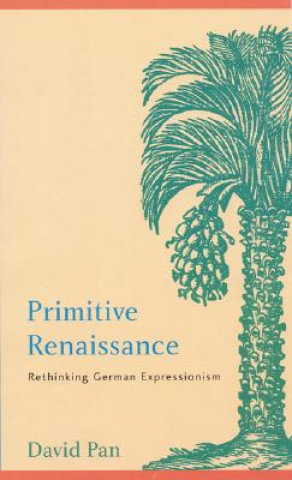
"Primitive Renaissance" argues that the radicality of early twentieth-century movements such as expressionism was not their modernism but rather their primitivism. At the heart of the work of Friedrich Nietzsche, Pablo Picasso, Wassily Kandinsky, Carl Einstein, and others was a critique of modernity through a primitivist aesthetic that privileged art over science and reason. Although drawing on non-European cultural traditions, the new aesthetic was not merely exoticism, an artistic phase or fad that opened a window on the cultural other. It was conceived less as a simple negation of the trappings of civilization than as a more pervasive and structured critique of how life is organized in the modern world. Based on a traditionalist rather than Enlightenment view of the function of art in society, primitivism contended that art provides the core mythic structure for human consciousness. On a broader level, by negating modernity, primitivism also challenged its inevitability. Modernity became one of a number of equally plausible cultural strategies for organizing life in the contemporary world. Ranging insightfully across the visual arts, literature, and philosophy, "Primitive Renaissance" offers a provocative reassessment of the significance of primitivism and its contribution to the intellectual, artistic, and cultural climate of Europe in the early twentieth century. David Pan is an acting assistant professor of German at Stanford University.


Sobre el libro
Inglés
Categorías

Regale este libro hoy
Es fácil
1 Añadir al carrito y elegir Entregar como regalo en el checkout 2 Le enviaremos un vale 3 El libro llegará a la dirección del destinatarioTambién puede interesarle














 /
Tapa blanda
30.39
€
/
Tapa blanda
30.39
€






 /
/
 Diario
11.79
€
Diario
11.79
€

¡Hola! Soy Libroamiko, tu asesor de libros.
¿Cómo puedo ayudarte?