Contacto
 Cómo comprar
Entrega
Guía de compras
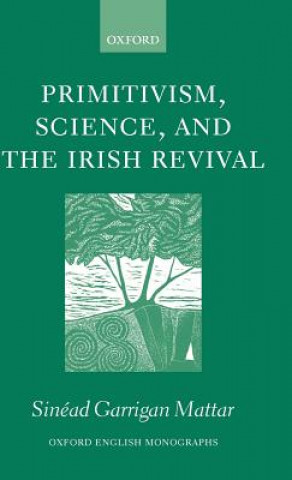
Primitivism, Science, and the Irish Revival
 Inglés
 810 b
810 b
Hasta 30 días para devoluciones
Clientes que también han comprado











 /
/
 Tapa blanda
 12.09
€
12.09
€









The literature of the Irish Revival of the 1890s should be seen as a hinge between the nineteenth- and twentieth-centuries. Its authors appropriated the 'primitive' through the lenses of comparative anthropology, mythology and colonial travel-writing and actively strove to re-establish contact with primitive modes through 'the study of mythology, anthropology and psychoanalysis'. They were engaged in was a complex and volitional primitivism, which became 'modernist' as it utilized the findings of social science. The works of W. B. Yeats, J. M. Synge and Lady Gregory are all analysed as the product of such influences. But Garrigan Mattar also suggests that Celticism itself underwent a sea-change during the nineteenth century, recreating itself in academic circles as an anti-primitivist science - 'Celtology'. It was only to be a matter of time before Yeats and Synge, who read widely in the works of Celtology, would look to this new science to find alternatives to the primitivism of the Twilight.


Sobre el libro
Inglés

Regale este libro hoy
Es fácil
1 Añadir al carrito y elegir Entregar como regalo en el checkout 2 Le enviaremos un vale 3 El libro llegará a la dirección del destinatarioTambién puede interesarle






 /
Tapa blanda
50.49
€
/
Tapa blanda
50.49
€