Contacto
 Cómo comprar
Entrega
Guía de compras
 Inglés
 444 b
444 b
Política de devolución de 30 días
Clientes que también han comprado








 /
/
 Tapa blanda
 17.89
€
17.89
€



 /
Tapa dura
37.69
€
/
Tapa dura
37.69
€



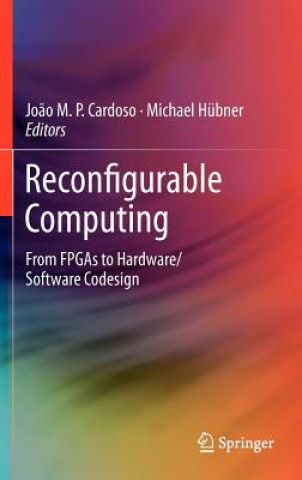
As the complexity of modern embedded systems increases, it becomes less practical to design monolithic processing platforms. As a result, reconfigurable computing is being adopted widely for more flexible design. Reconfigurable Computers offer the spatial parallelism and fine-grained customizability of application-specific circuits with the postfabrication programmability of software. To make the most of this unique combination of performance and flexibility, designers need to be aware of both hardware and software issues. FPGA users must think not only about the gates needed to perform a computation but also about the software flow that supports the design process. The goal of this book is to help designers become comfortable with these issues, and thus be able to exploit the vast opportunities possible with reconfigurable logic.§Focuses on both hardware and software systemsTreats FPGAs as computing vehicles rather than glue-logic or ASIC substitutesAssembles broad set of models for exploiting FPGA parallelismDemonstrates how to use and manage reconfigurationProvides broad set of case studies demonstrating how to use FPGAs in novel and efficient ways §


Sobre el libro
Inglés
Categorías

Regale este libro hoy
Es fácil
1 Añadir al carrito y elegir Entregar como regalo en el checkout 2 Le enviaremos un vale 3 El libro llegará a la dirección del destinatarioTambién puede interesarle




 /
Tapa dura
16.09
€
/
Tapa dura
16.09
€




 /
Tapa blanda
325.79
€
/
Tapa blanda
325.79
€