Contacto
 Cómo comprar
Entrega
Guía de compras
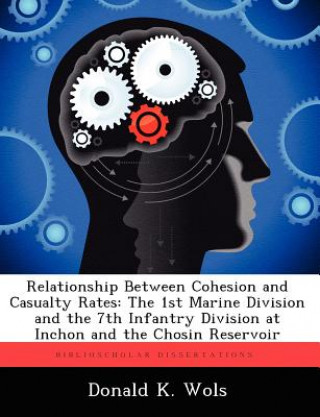
Relationship Between Cohesion and Casualty Rates
The 1st Marine Division and the 7th Infantry Division at Inchon and the Chosin Reservoir
 Inglés
 47 b
47 b
Hasta 30 días para devoluciones
Clientes que también han comprado











 /
/
 Tapa blanda
 15.89
€
15.89
€



 /
Tapa blanda
17.89
€
/
Tapa blanda
17.89
€


The 1st Marine and 7th Infantry Divisions fought two campaigns in Korea between September and December 1950. These divisions' levels of unit cohesion prior to and during their employment affected the number of men who became casualties during the three and one-half months of combat. Casualty rates can be affected by friendly-enemy force ratios and tactical advantages, but this historical analysis shows that units opposing similar enemies in similar tactical situations still have markedly different casualty rates that are not attributable to enemy numbers and disposition. Programs such as the Selective Service and the Korean Augmentation to the United States Army (KATUSA), originally designed to help combat units, ultimately destroyed any hope for cohesion that the 7th Infantry Division might have had. Comparing the performances of the 1st Marine Division and the 7th Infantry Division, after highlighting the myriad of circumstances impacting those performances, defines a relationship between their levels of cohesion and the numbers of casualties they suffered. It is clear that the 1st Marine Division was more cohesive than the 7th Infantry Division and suffered fewer casualties as a result.


Sobre el libro
Inglés
Categorías

Regale este libro hoy
Es fácil
1 Añadir al carrito y elegir Entregar como regalo en el checkout 2 Le enviaremos un vale 3 El libro llegará a la dirección del destinatarioTambién puede interesarle





 /
Tapa blanda
19.09
€
/
Tapa blanda
19.09
€



 /
Tapa blanda
21.09
€
/
Tapa blanda
21.09
€

 /
Tapa blanda
33.69
€
/
Tapa blanda
33.69
€