
 Contacto
 Cómo comprar
Entrega
Guía de compras
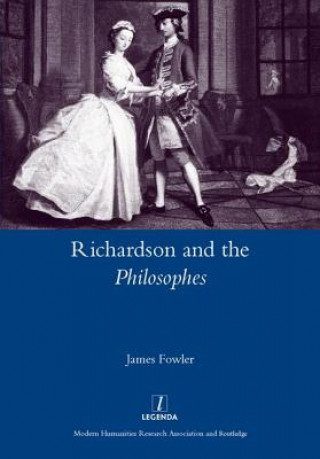
Richardson and the Philosophes
 Inglés
 376 b
376 b
Hasta 30 días para devoluciones
Clientes que también han comprado






 /
/
 Tapa dura
 32.79
€
32.79
€

 /
Tapa blanda
14.19
€
/
Tapa blanda
14.19
€



 /
Tapa blanda
27.09
€
/
Tapa blanda
27.09
€






 /
Tapa blanda
32.49
€
/
Tapa blanda
32.49
€

 /
Tapa blanda
49.19
€
/
Tapa blanda
49.19
€
 /
Tapa blanda
55.09
€
/
Tapa blanda
55.09
€




In mid-eighteenth-century Europe, a taste for sentiment accompanied the 'rise of the novel', and the success of Samuel Richardson (1689-1761) played a vital role in this. James Fowler's new study is the first to compare the response of the most famous philosophes to the Richardson phenomenon. Voltaire, who claims to despise the novel, writes four 'Richardsonian' fictions; Diderot's fascination with the English author is expressed in La Religieuse, Rousseau's in Julie - the century's bestseller. Yet the philosophes' response remains ambivalent. On the one hand they admire Richardson's ability to make the reader weep. On the other, they champion a range of Enlightenment beliefs which he, an enthusiast of Milton, vehemently opposed. In death as in life, the English author exacerbates the philosophes' rivalry. The eulogy which Diderot writes in 1761 implicitly asks: who can write a new Clarissa? But also: whose social, philosophical or political ideas will triumph as a result?


Sobre el libro
Inglés

Regale este libro hoy
Es fácil
1 Añadir al carrito y elegir Entregar como regalo en el checkout 2 Le enviaremos un vale 3 El libro llegará a la dirección del destinatarioTambién puede interesarle







 /
Tapa blanda
10.69
€
/
Tapa blanda
10.69
€

 /
Tapa blanda
15.19
€
/
Tapa blanda
15.19
€



 /
Tapa dura
225.39
€
/
Tapa dura
225.39
€

¡Hola! Soy Libroamiko, tu asesor de libros.
¿Cómo puedo ayudarte?