
 Contacto
 Cómo comprar
Entrega
Guía de compras
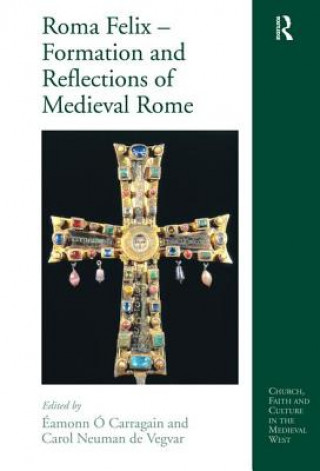
Roma Felix - Formation and Reflections of Medieval Rome
 Inglés
 617 b
617 b
Hasta 30 días para devoluciones
Clientes que también han comprado





 /
/
 Tapa blanda
 11.59
€
11.59
€




 /
Tapa blanda
111.99
€
/
Tapa blanda
111.99
€












After the Roman empire fell, medieval Europe continued to be fascinated by Rome itself, the 'chief of cities'. Once the hub of empire, in the early medieval period Rome became an important centre for western Christianity, first of all as the place where Peter, Paul and many other important early Christian saints were martyred: their deaths for the Christian faith gave the city the appellation "Roma Felix", "Happy Rome". But in Rome the history of the faith, embodied in the shrines of the martyrs, coexisted with the living centre of the western Latin church. Because Peter had been recognised by Christ as chief among the apostles and was understood to have been the first bishop of Rome, his successors were acknowledged as patriarchs of the West and Rome became the focal point around which the western Latin church came to be organised.This book explores ways in which Rome itself was preserved, envisioned, and transformed by its residents, and also by the many pilgrims who flocked to the shrines of the martyrs. It considers how northern European cultures (in particular, the Irish and English) imagined and imitated the city as they understood it. The fifteen articles presented here range from the fourth to the twelfth century and span the fields of history, art history, urban topography, liturgical studies and numismatics. They provide an introduction to current thinking about the ways in which medieval people responded to the material remains of Rome's classical and early Christian past, and to the associations of centrality, spirituality, and authority which the city of Rome embodied for the earlier Middle Ages.


Sobre el libro
Inglés

Regale este libro hoy
Es fácil
1 Añadir al carrito y elegir Entregar como regalo en el checkout 2 Le enviaremos un vale 3 El libro llegará a la dirección del destinatarioTambién puede interesarle






 /
Tapa blanda
10.69
€
/
Tapa blanda
10.69
€
 /
Tapa dura
39.69
€
/
Tapa dura
39.69
€






 /
Tapa blanda
169.09
€
/
Tapa blanda
169.09
€






 /
/
 Adobe ePub DRM
319.79
€
Adobe ePub DRM
319.79
€


¡Hola! Soy Libroamiko, tu asesor de libros.
¿Cómo puedo ayudarte?