
 Contacto
 Cómo comprar
Entrega
Guía de compras
 Inglés
 329 b
329 b
Política de devolución de 30 días
Clientes que también han comprado


 /
/
 Tapa dura
 17.79
€
17.79
€













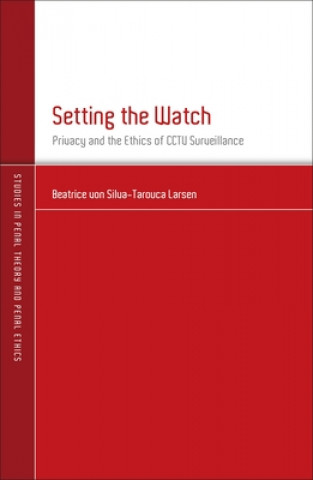
Many liberals consider CCTV surveillance in public places - particularly when it is as extensive as it is in England - to be an infringement of important privacy-based rights. An influential report by the House of Lords in 2009 also took this view. However there has been little public, or academic, discussion of the underlying principles and ethical issues. What rights of privacy or anonymity do people have when abroad in public space? What is the rationale for these rights? In what respect does CCTV surveillance compromise them? To what extent does the state's interest in crime prevention warrant encroachment upon such privacy and anonymity rights? This book offers the first extended, systematic treatment of these issues. In it, the author develops a theory concerning the rationale for the entitlement to privacy and anonymity in public space, based on notions of liberty and dignity. She examines how CCTV surveillance may compromise these rights, drawing on everyday conventions of civil inattention among people in the public domain. She also considers whether and to what extent crime-control concerns could justify overriding these entitlements. The author's conclusion is that CCTV surveillance should be appropriate only in certain restrictively-defined situations. The book ends with a proposal for a scheme of CCTV surveillance that reflects this conclusion.


Sobre el libro
Inglés

Regale este libro hoy
Es fácil
1 Añadir al carrito y elegir Entregar como regalo en el checkout 2 Le enviaremos un vale 3 El libro llegará a la dirección del destinatarioTambién puede interesarle
 /
Tapa dura
189.89
€
/
Tapa dura
189.89
€



 /
Tapa blanda
27.39
€
/
Tapa blanda
27.39
€
 /
Tapa blanda
20.79
€
/
Tapa blanda
20.79
€







 /
Tapa blanda
47.29
€
/
Tapa blanda
47.29
€



 /
Tapa blanda
25.89
€
/
Tapa blanda
25.89
€



¡Hola! Soy Libroamiko, tu asesor de libros.
¿Cómo puedo ayudarte?