Contacto
 Cómo comprar
Entrega
Guía de compras
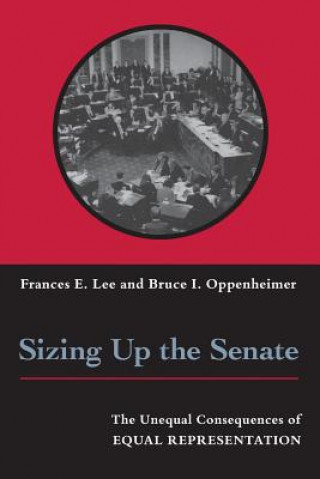
Sizing Up the Senate
The Unequal Consequence of Equal Representation
 Inglés
 84 b
84 b
Hasta 30 días para devoluciones
Clientes que también han comprado










 /
/
 Tapa blanda
 8.19
€
8.19
€



 /
Tapa blanda
17.69
€
/
Tapa blanda
17.69
€



 /
Tapa blanda
19.99
€
/
Tapa blanda
19.99
€



 /
Tapa blanda
25.09
€
/
Tapa blanda
25.09
€

 /
Tapa blanda
110.99
€
/
Tapa blanda
110.99
€


We take it for granted that every state has two representatives in the United States Senate. Apply the "one person, one vote" standard, however, and the Senate is the most malapportioned legislature in the democratic world. But does it matter that California's 32 million people have the same number of Senate votes as Wyoming's 480,000? Frances Lee and Bruce Oppenheimer systematically show that the Senate's unique apportionment scheme profoundly shapes legislation and representation. The size of a state's population affects the senator-constituent relationship, fund-raising and elections, strategic behaviour within the Senate, and, ultimately, policy decisions. They also show that less populous states consistently receive more federal funding than states with more people. In sum, Lee and Oppenheimer reveal that Senate apportionment leaves no aspect of the institution untouched. This book raises questions about one of the key institutions of American government and should be of interest to anyone concerned with issues of representation.


Sobre el libro
Inglés

Regale este libro hoy
Es fácil
1 Añadir al carrito y elegir Entregar como regalo en el checkout 2 Le enviaremos un vale 3 El libro llegará a la dirección del destinatarioTambién puede interesarle

 /
Tapa blanda
32.99
€
/
Tapa blanda
32.99
€





 /
Tapa blanda
51.19
€
/
Tapa blanda
51.19
€
 /
Tapa dura
41.59
€
/
Tapa dura
41.59
€




 /
Tapa blanda
12.99
€
/
Tapa blanda
12.99
€








 /
Tapa blanda
52.99
€
/
Tapa blanda
52.99
€