
 Contacto
 Cómo comprar
Entrega
Guía de compras
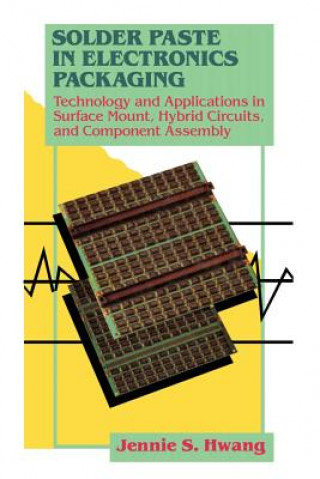
Solder Paste in Electronics Packaging
Technology and Applications in Surface Mount, Hybrid Circuits, and Component Assembly
 Inglés
 139 b
139 b
Hasta 30 días para devoluciones
Clientes que también han comprado









 /
/
 Tapa blanda
 17.89
€
17.89
€






 /
Tapa blanda
8.49
€
/
Tapa blanda
8.49
€










One of the strongest trends in the design and manufacture of modern electronics packages and assemblies is the utilization of surface mount technology as a replacement for through-hole tech nology. The mounting of electronic devices and components onto the surface of a printed wiring board or other substrate offers many advantages over inserting the leads of devices or components into holes. From the engineering viewpoint, much higher lead counts with shorter wire and interconnection lengths can be accommo dated. This is critical in high performance modern electronics packaging. From the manufacturing viewpoint, the application of automated assembly and robotics is much more adaptable to high lead count surface mounted devices and components. Indeed, the insertion of high lead count parts into fine holes on a substrate might often be nearly impossible. Yet, in spite of these surface mounting advantages, the utilization of surface mount technology is often a problem, primarily due to soldering problems. The most practical soldering methods use solder pastes, whose intricacies are frequently not understood by most of those involved in the engineering and manufacture of electronics assemblies. This publication is the first book devoted exclusively to explanations of the broad combination of the chemical, metallurgical, and rheological principles that are critical to the successful use of solder pastes. The critical relation ships between these characteristics are clearly explained and pre sented. In this excellent presentation, Dr. Hwang highlights three impor tant areas of solder paste technology.


Sobre el libro
Inglés

Regale este libro hoy
Es fácil
1 Añadir al carrito y elegir Entregar como regalo en el checkout 2 Le enviaremos un vale 3 El libro llegará a la dirección del destinatarioTambién puede interesarle







 /
Tapa blanda
29.39
€
/
Tapa blanda
29.39
€
 /
Tapa blanda
9.79
€
/
Tapa blanda
9.79
€

 /
Tapa blanda
48.19
€
/
Tapa blanda
48.19
€





 /
Tapa dura
44.59
€
/
Tapa dura
44.59
€







¡Hola! Soy Libroamiko, tu asesor de libros.
¿Cómo puedo ayudarte?