
 Contacto
 Cómo comprar
Entrega
Guía de compras
Spatial Inequality and Development
 Inglés
 520 b
520 b
Política de devolución de 30 días
Clientes que también han comprado






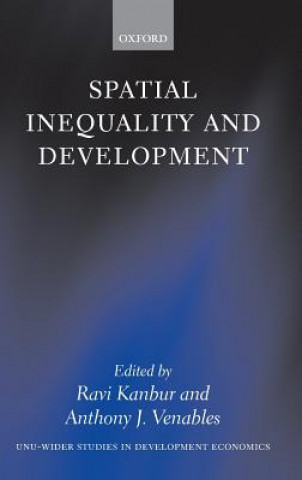
What exactly is spatial inequality? Why does it matter? And what should be the policy response to it? These questions have become important in recent years as the spatial dimensions of inequality have begun to attract considerable policy interest. In China, Russia, India, Mexico, and South Africa, as well as most other developing and transition economies, spatial and regional inequality - of economic activity, incomes, and social indicators - is on the increase. Spatial inequality is a dimension of overall inequality, but it has added significance when spatial and regional divisions align with political and ethnic tensions to undermine social and political stability. Also important in the policy debate is a perceived sense that increasing internal spatial inequality is related to greater openness of economies, and to globalization in general. Despite these important concerns, there is remarkably little systematic documentation of what has happened to spatial and regional inequality over the last twenty years. Correspondingly, there is insufficient understanding of the determinants of internal spatial inequality. This volume attempts to answer the questions posed above, drawing on data from twenty-five countries from all regions of the world. They bring together perspectives and expertise in development economics and in economic geography and form a well-researched introduction to an area of growing analytical and policy importance.


Sobre el libro
Inglés

Regale este libro hoy
Es fácil
1 Añadir al carrito y elegir Entregar como regalo en el checkout 2 Le enviaremos un vale 3 El libro llegará a la dirección del destinatarioTambién puede interesarle

 /
/
 Tapa blanda
 169.09
€
169.09
€




¡Hola! Soy Libroamiko, tu asesor de libros.
¿Cómo puedo ayudarte?