
 Contacto
 Cómo comprar
Entrega
Guía de compras
Strategic Management of Wastewater from Intensive Rural Industries
 Inglés
 414 b
414 b
Política de devolución de 30 días

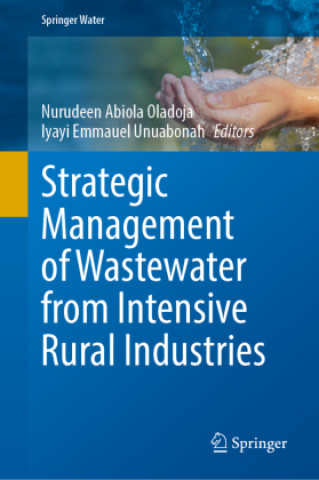
This book provides insight into the environmental and ecological impacts of the operations of intensive rural industries and how these undesirable impacts can be effectively managed. In the developing economies, the different human empowerment and poverty alleviation schemes have produced myriads of intensive rural industries that littered States in these economies. These industries are often characterized by their small scale, outmoded technology, obsolete equipment, poor management and large water consumption. Since their operations usually consume large volume of fresh water, high magnitude of untreated wastewater is equally discharged. The huge consumption of freshwater puts a lot of stress on freshwater resource available for human use, and the discharge of contaminated wastewater from these industries disrupts the ecological balance. It has been reported that untreated industrial waste constitutes about two-thirds of the total waste discharge into water bodies, and the largest chunk of this is derived from rural enterprises. Therefore, the environmental cost of rural industrialization is enormous and needs to be examined.
The evaluation of the quality characteristics, the socioeconomic impacts and the law guiding the generation and the discharge of the wastewater from specific rural industries are enunciated. The conventional practice and the trends in the effective management of specific wastewater samples are also discussed.


Sobre el libro
Inglés
