
 Contacto
 Cómo comprar
Entrega
Guía de compras
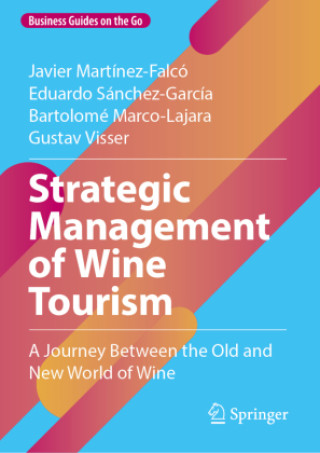
Strategic Management of Wine Tourism
A Journey Between the Old and New World of Wine
 Inglés
 74 b
74 b
 Nuevo
Nuevo
Política de devolución de 30 días

This book examines how wine tourism is designed, interpreted and strategically justified by wineries through a comparative analysis of two emblematic wine regions: Rioja (Spain) and Mendoza (Argentina). Commonly associated with the Old World and New World traditions, respectively, these regions offer contrasting yet comparable settings for analyzing how wine tourism strategies are shaped by territory, history and institutional context. Adopting a producer-centered perspective, the book draws on resource and capabilities theory, network-based approaches and institutional theory to explain how wineries mobilize territorial resources, coordinate with regional actors and respond to regulatory and legitimacy pressures. Wine tourism is analyzed not as a transferable managerial model but as a territorially embedded strategic practice that evolves through path-dependent processes.
The analysis pays particular attention to contextual factors that condition strategic choice, including cultural heritage, environmental conditions, governance structures and regional economic trajectories. Through its comparative design, the book shows how similar strategic intentions lead to different wine tourism configurations when filtered through distinct territorial logics. Moreover, it contributes to a deeper understanding of wine tourism as a strategic activity grounded in place, producer interpretation and long-term regional development.


Sobre el libro
Inglés
