
 Contacto
 Cómo comprar
Entrega
Guía de compras
 Inglés
 88 b
88 b
Hasta 30 días para devoluciones
Clientes que también han comprado












 /
/
 Tapa blanda
 19.99
€
19.99
€


 /
Tapa blanda
38.39
€
/
Tapa blanda
38.39
€





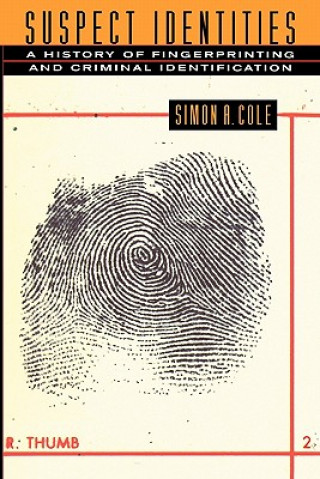
"No two fingerprints are alike," or so it goes. For nearly a hundred years fingerprints have represented definitive proof of individual identity in our society. We trust them to tell us who committed a crime, whether a criminal record exists, and how to resolve questions of disputed identity. But in this text, Simon Cole reveals that the history of criminal identification is far murkier than we have been led to believe. Cole traces the modern system of fingerprint identification to the 19th-century bureaucratic state, and its desire to track and control increasingly mobile, diverse populations whose race or ethnicity made them suspect in the eyes of authorities. In an intriguing history that traverses the globe, taking us to India, Argentina, France, England, and the United States, Cole excavates the forgotten history of criminal identification - from photography to exotic anthropometric systems based on measuring body parts, from finger-printing to DNA typing. He reveals how fingerprinting ultimately won the trust of the public and the law only after a long battle against rival identification systems. As we rush headlong into the era of genetic identification, and as fingerprint errors are being exposed, this history uncovers the fascinating interplay of our elusive individuality, police and state power, and the quest for scientific certainty.


Sobre el libro
Inglés
Categorías

Regale este libro hoy
Es fácil
1 Añadir al carrito y elegir Entregar como regalo en el checkout 2 Le enviaremos un vale 3 El libro llegará a la dirección del destinatarioTambién puede interesarle









 /
Tapa dura
108.99
€
/
Tapa dura
108.99
€



 /
Tapa blanda
12.19
€
/
Tapa blanda
12.19
€




 /
Tapa blanda
14.19
€
/
Tapa blanda
14.19
€
 /
Tapa dura
27.89
€
/
Tapa dura
27.89
€



 /
Tapa blanda
15.09
€
/
Tapa blanda
15.09
€

¡Hola! Soy Libroamiko, tu asesor de libros.
¿Cómo puedo ayudarte?