
 Contacto
 Cómo comprar
Entrega
Guía de compras
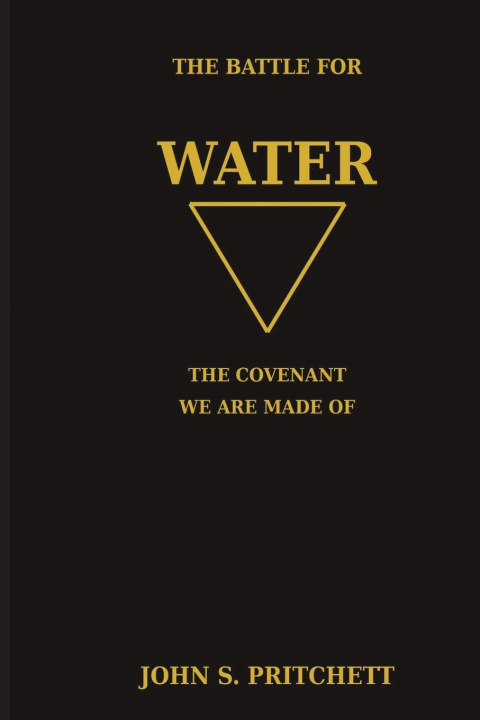
The Battle for Water
 Inglés
 40 b
40 b
 Próximamente
 Nuevo
Nuevo
 Fecha desconocida
Hasta 30 días para devoluciones

Water is the foundation of life, but the systems built around it are becoming less certain, less equal, and more difficult to sustain.
The Battle for Water: The Covenant We Are Made Of examines how scarcity, contamination, climate change, aging infrastructure, and unequal access are reshaping one of humanity's most essential relationships.
John S. Pritchett explores water not simply as a resource, but as a system that connects bodies, communities, economies, ecosystems, and nations. Rivers cross borders. Aquifers underlie multiple jurisdictions. Snowpack feeds distant cities and farms. Decisions made upstream alter lives downstream. Water binds society together even when laws, markets, and politics treat it as divided.
Scarcity does not create every weakness in a water system. It reveals the weaknesses that abundance allowed us to ignore.
Across twenty-four chapters, the book examines water as origin, boundary, burden, inequity, exposure, geography, infrastructure, economy, governance, warning, security, conflict, culture, choice, meaning, and legacy. It shows how drought, flood, pollution, declining aquifers, shrinking reservoirs, and changing snowpack affect far more than supply. They influence food prices, public health, migration, property, energy, political trust, and social stability.
The book also confronts the unequal distribution of risk. Some communities can drill deeper wells, install filtration, rebuild after floods, or relocate. Others face dry taps, contaminated supplies, failing pipes, and repeated exposure with few alternatives. Water follows physical law, but access and protection are shaped by history, wealth, infrastructure, and political power.
The battle for water is therefore not only a struggle over quantity. It is a struggle over fairness, responsibility, and whose future is protected.
Yet this is not a book of resignation. It examines practical paths toward resilience, including conservation, wastewater recycling, aquifer recharge, wetland restoration, smarter irrigation, updated infrastructure, adaptive governance, shared monitoring, and more transparent allocation. It argues that technology matters, but technology alone cannot solve a crisis rooted in systems, values, and choices.
Accessible, wide-ranging, and grounded in environmental, political, economic, and ethical questions, The Battle for Water is written for readers concerned about climate change, public policy, infrastructure, inequality, security, and the future of human settlement.
The central question is not whether water will continue to shape civilization. It will.
The question is whether societies will respond to scarcity through conflict and exclusion-or through stewardship, cooperation, and renewal.
The water we safeguard, share, and restore will determine the world we leave behind.


Sobre el libro
Inglés
Categorías

Regale este libro hoy
Es fácil
1 Añadir al carrito y elegir Entregar como regalo en el checkout 2 Le enviaremos un vale 3 El libro llegará a la dirección del destinatario¡Hola! Soy Libroamiko, tu asesor de libros.
¿Cómo puedo ayudarte?