
 Contacto
 Cómo comprar
Entrega
Guía de compras
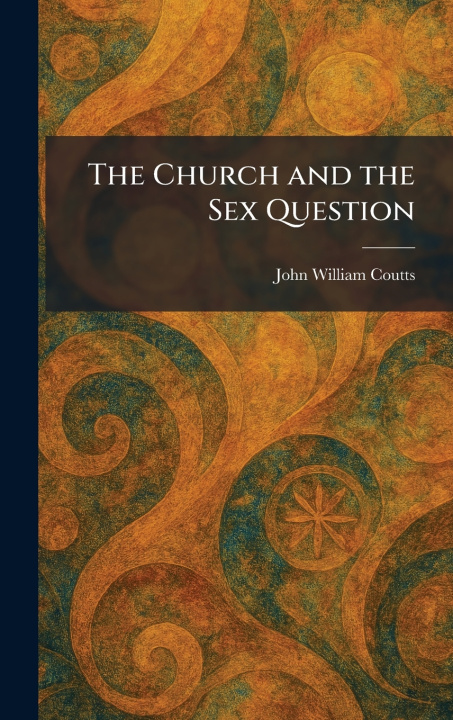
The Church and the Sex Question
 Inglés
 85 b
85 b
 Nuevo
Nuevo
Política de devolución de 30 días

"The Church and the Sex Question" is a probing examination of the intersection between Christian theology and human sexuality during a period of significant social transition. Written by John William Coutts, this work addresses the moral and ethical challenges facing the ecclesiastical community in the early twentieth century. The text explores foundational themes such as the sanctity of marriage, the role of the family, and the Church's stance on evolving social norms.
Coutts offers a thoughtful perspective on how religious institutions might respond to contemporary shifts in personal conduct and social responsibility. By analyzing the biblical and traditional foundations of Christian ethics, the author seeks to provide guidance that is both historically grounded and relevant to the complexities of modern life. This work serves as an insightful historical document, capturing the discourse surrounding social reform and moral leadership in the 1920s. It remains a significant resource for scholars of religious history, students of Christian ethics, and those interested in the sociology of marriage and family.
This work has been selected by scholars as being culturally important, and is part of the knowledge base of civilization as we know it. This work was reproduced from the original artifact, and remains as true to the original work as possible. Therefore, you may see the original copyright references, library stamps (as most of these works have been housed in our most important libraries around the world), and other notations in the work.
This work is in the public domain in the United States of America, and possibly other nations. Within the United States, you may freely copy and distribute this work, as no entity (individual or corporate) has a copyright on the body of the work.
As a reproduction of a historical artifact, this work may contain missing or blurred pages, poor pictures, errant marks, etc. Scholars believe, and we concur, that this work is important enough to be preserved, reproduced, and made generally available to the public. We appreciate your support of the preservation process, and thank you for being an important part of keeping this knowledge alive and relevant.


Sobre el libro
Inglés
