
 Contacto
 Cómo comprar
Entrega
Guía de compras
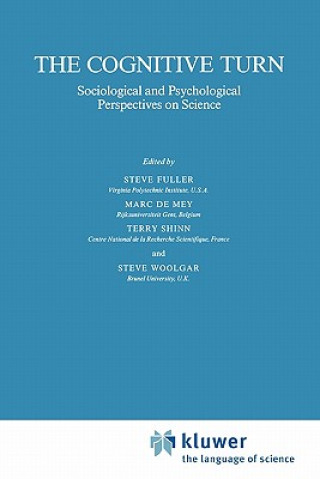
Cognitive Turn
Sociological and Psychological Perspectives on Science
 Inglés
 444 b
444 b
Política de devolución de 30 días
Clientes que también han comprado

 /
/
 Tapa blanda
 15.89
€
15.89
€

 /
Tapa blanda
36.39
€
/
Tapa blanda
36.39
€
 /
Tapa blanda
65.69
€
/
Tapa blanda
65.69
€








If nothing else, the twelve papers assembled in this volume should lay to rest the idea that the interesting debates about the nature of science are still being conducted by "internalists" vs. "externalists,"" rationalists" vs. "arationalists, n or even "normative epistemologists" vs. "empirical sociologists of knowledge. " Although these distinctions continue to haunt much of the theoretical discussion in philosophy and sociology of science, our authors have managed to elude their strictures by finally getting beyond the post-positivist preoccupation of defending a certain division of labor among the science studies disciplines. But this is hardly to claim that our historians, philosophers, sociologists, and psychologists have brought about an "end of ideology," or even an "era of good feelings," to their debates. Rather, they have drawn new lines of battle which center more squarely than ever on practical matters of evaluating and selecting methods for studying science. To get a vivid sense of the new terrain that was staked out at the Yearbook conference, let us start by meditating on a picture. The front cover of a recent collection of sociological studies edited by one of us (Woolgar 1988) bears a stylized picture of a series of lined up open books presented in a typical perspective fashion. The global shape comes close to a trapezium, and is composed of smaller trapeziums gradually decreasing in size and piled upon each other so as to suggest a line receding in depth. The perspective is stylized too.


Sobre el libro
Inglés

Regale este libro hoy
Es fácil
1 Añadir al carrito y elegir Entregar como regalo en el checkout 2 Le enviaremos un vale 3 El libro llegará a la dirección del destinatarioTambién puede interesarle



 /
Tapa dura
38.19
€
/
Tapa dura
38.19
€
 /
Tapa dura
181.49
€
/
Tapa dura
181.49
€
 /
Tapa dura
46.69
€
/
Tapa dura
46.69
€





















¡Hola! Soy Libroamiko, tu asesor de libros.
¿Cómo puedo ayudarte?