
 Contacto
 Cómo comprar

Entrega
Guía de compras
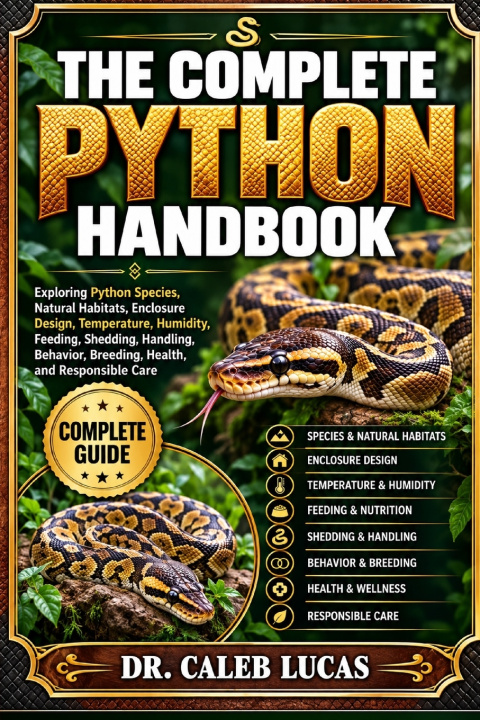
THE COMPLETE PYTHON HANDBOOK
Exploring Python Species, Natural Habitats, Enclosure Design, Temperature, Humidity, Feeding, Shedding, Handling, Behavior, Breeding, Health, and Responsible Care
 Inglés
 44 b
 Próximamente
 Nuevo
Hasta 30 días para devoluciones

P
ythons are among the most fascinating reptiles kept by responsible
animal enthusiasts. Their strength, intelligence, feeding behavior,
body language, and remarkable variety make them rewarding animals
to observe and care for. At the same time, python ownership is not something
to approach casually. Different species can have dramatically different adult
sizes, environmental requirements, temperaments, feeding patterns, and
handling needs.
A Ball Python and an adult Reticulated Python may both belong to the
python family, but caring for them can involve very different levels of space,
equipment, experience, safety planning, and financial commitment.
This handbook is designed to help readers approach python keeping with
preparation rather than guesswork. Whether you are considering your
first python, already care for several snakes, or are an experienced keeper
interested in less common species, the goal is the same: provide animals with
secure housing, appropriate environmental conditions, suitable food and
water, clean surroundings, safe handling, enrichment, careful observation,
and responsible lifelong care.
2CHAPTER 1
Good python keeping is not about simply keeping a snake alive. It is
about creating conditions in which the animal can behave naturally, remain
comfortable, and receive attentive care throughout its life.
1.1 Understanding the Book's Purpose and Main Promise
The purpose of this handbook is straightforward: to make responsible python
care easier to understand and apply.
The collection covers a wide range of species and groups, including
Ball Pythons, Reticulated Pythons, Burmese Pythons, Green Tree Pythons,
Blood Pythons, Carpet Pythons, Angolan Pythons, African Rock Pythons,
Water Pythons, Savu Pythons, Stimson's Pythons, Woma Pythons, Children's
Pythons, Oenpelli Pythons, and many other species.
Because these animals differ considerably, one of the most important
principles throughout this book is simple:
Do not assume that what works for one python automatically works
for another.
A practical care routine begins with identifying the species and understand
ing its natural history. Before changing an enclosure, adjusting environmental
conditions, planning meals, or beginning a handling routine, the keeper
should know what type of python is involved and what that animal is naturally
adapted to.
The book therefore combines general principles with species-specific
considerations. General principles such as cleanliness, escape prevention,
observation, appropriate feeding, and respectful handling apply broadly.
Specific habitat design, adult space requirements, activity patterns, and
temperament considerations must be evaluated according to the individual
species.
The practical promise of this handbook is to help you move from uncer
tainty to a structured routine.
Instead of wondering what to check each day, you can develop a simple
sequence:
3THE COMPLETE PYTHON HANDBOOK
1. Observe the python before disturbing it.
2. Check that the enclosure is secure.
3. Confirm that environmental conditions remain appropriate for the
species.
4. Check the water supply and general cleanliness.
5. Observe the animal's appearance and behavior.
6. Remove obvious waste when necessary.
7. Provide food according to an appropriate feeding routine.
8. Record unusual observations.
9. Handle the animal only when handling is appropriate and safe.
10. Seek professional veterinary assistance when concerning health changes
occur.


Sobre el libro
Inglés

Regale este libro hoy
Es fácil
1 Añadir al carrito y elegir Entregar como regalo en el checkout 2 Le enviaremos un vale 3 El libro llegará a la dirección del destinatario¡Hola! Soy Libroamiko, tu asesor de libros.
¿Cómo puedo ayudarte?