
 Contacto
 Cómo comprar
Entrega
Guía de compras
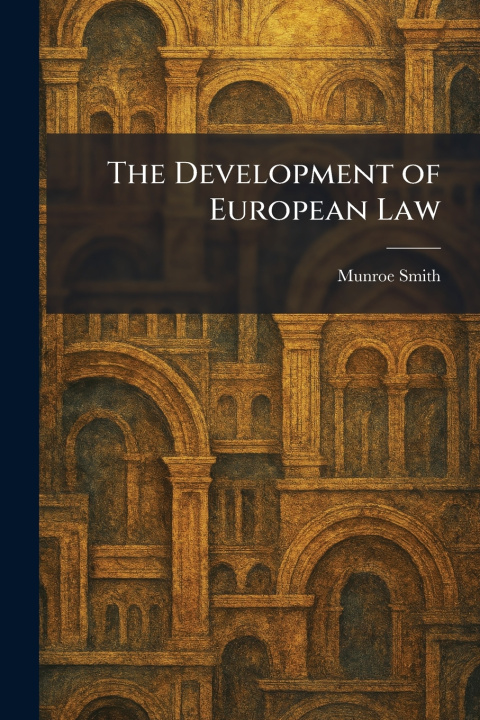
The Development of European Law
 Inglés
 61 b
61 b
Política de devolución de 30 días

"The Development of European Law" provides a comprehensive survey of the evolution of legal systems across the European continent. This scholarly work meticulously traces the transition from primitive tribal customs to the sophisticated legal frameworks of the modern era. The text explores the profound influence of Roman law and its eventual reception in various European territories, alongside the development of canon law and the impact of feudalism on judicial structures.
The work delves into the synthesis of diverse legal traditions, examining how Germanic customs and Roman principles merged to form the foundation of contemporary civil law. By analyzing the historical forces that shaped legislation and judicial practice, the author offers an illuminating perspective on the intellectual and social underpinnings of European governance. This volume is an essential resource for students of jurisprudence, history, and political science, providing clarity on the complex processes that led to the harmonization and differentiation of national legal systems.
With its rigorous scholarly approach, "The Development of European Law" remains a significant contribution to the field of comparative legal history. It captures the spirit of legal evolution, highlighting the enduring legacy of classical thought and the transformative power of institutional change in shaping the justice systems of the Western world.
This work has been selected by scholars as being culturally important, and is part of the knowledge base of civilization as we know it. This work was reproduced from the original artifact, and remains as true to the original work as possible. Therefore, you may see the original copyright references, library stamps (as most of these works have been housed in our most important libraries around the world), and other notations in the work.
This work is in the public domain in the United States of America, and possibly other nations. Within the United States, you may freely copy and distribute this work, as no entity (individual or corporate) has a copyright on the body of the work.
As a reproduction of a historical artifact, this work may contain missing or blurred pages, poor pictures, errant marks, etc. Scholars believe, and we concur, that this work is important enough to be preserved, reproduced, and made generally available to the public. We appreciate your support of the preservation process, and thank you for being an important part of keeping this knowledge alive and relevant.


Sobre el libro
Inglés
