
 Contacto
 Cómo comprar
Entrega
Guía de compras
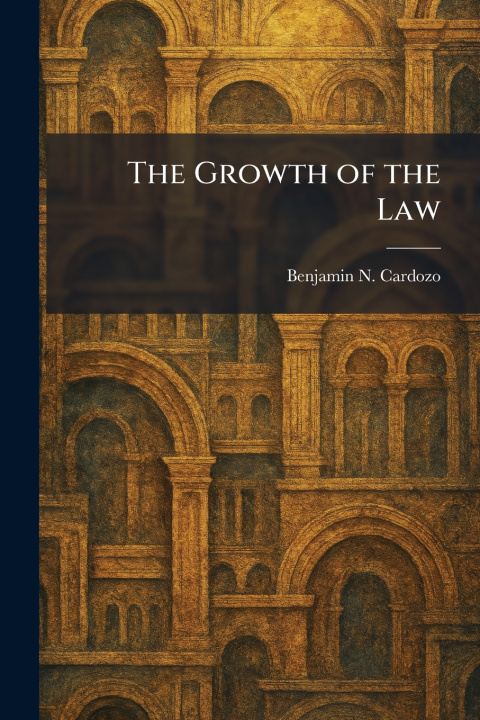
The Growth of the Law
 Inglés
 50 b
50 b
Política de devolución de 30 días

"The Growth of the Law" is a seminal exploration of legal philosophy and the dynamic nature of jurisprudence by the esteemed jurist Benjamin N. Cardozo. Building upon the foundations laid in his earlier work, this volume examines the processes through which law evolves to meet the changing needs of society. Cardozo delves into the tension between the need for stability in legal principles and the necessity of growth, advocating for a judicial approach that acknowledges the sociological and moral implications of the law.
Throughout the text, Cardozo analyzes the sources of legal change, the role of precedent, and the creative function of the judge in shaping the law. He emphasizes that the law is not a static set of rules but a living organism that must adapt to the progress of civilization. With his characteristic eloquence and deep intellectual insight, Cardozo addresses the challenges of legal interpretation and the quest for a more perfect justice.
As a foundational text in American legal thought, "The Growth of the Law" remains essential reading for law students, legal professionals, and anyone interested in the philosophy of law and the judicial process. Cardozo's masterful synthesis of history, logic, and social science continues to influence the way we understand the development of the legal system today.
This work has been selected by scholars as being culturally important, and is part of the knowledge base of civilization as we know it. This work was reproduced from the original artifact, and remains as true to the original work as possible. Therefore, you may see the original copyright references, library stamps (as most of these works have been housed in our most important libraries around the world), and other notations in the work.
This work is in the public domain in the United States of America, and possibly other nations. Within the United States, you may freely copy and distribute this work, as no entity (individual or corporate) has a copyright on the body of the work.
As a reproduction of a historical artifact, this work may contain missing or blurred pages, poor pictures, errant marks, etc. Scholars believe, and we concur, that this work is important enough to be preserved, reproduced, and made generally available to the public. We appreciate your support of the preservation process, and thank you for being an important part of keeping this knowledge alive and relevant.


Sobre el libro
Inglés
Categorías
