
 Contacto
 Cómo comprar
Entrega
Guía de compras
 Inglés
 38 b
38 b
 Nuevo
Nuevo
Hasta 30 días para devoluciones

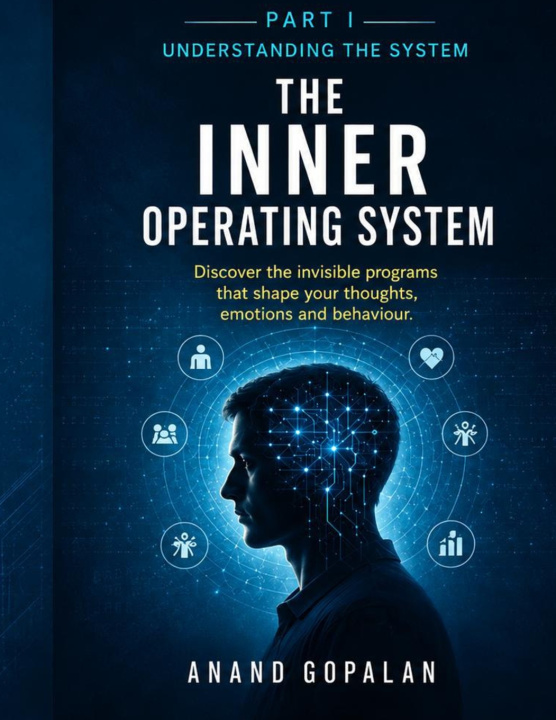
The Most Complex System We Never Learned to Operate
A systems engineer's question about the human being "We have become extraordinarily good at building intelligent external systems while remaining surprisingly poor at understanding our own internal systems." For most of human history, survival required us to understand the world outside ourselves. We learned to read about weather, seasons, animals, rivers and stars. Later, we learned to build machines, factories, computers and networks. We became remarkably skilled at designing systems that were faster, stronger and more precise than anything a single human could do alone. And then something strange happened. Our external systems became increasingly sophisticated while the system we carry everywhere remained largely mysterious to us. We learned how to operate a smartphone in minutes, configure a cloud platform in hours and deploy a complex application across continents. Yet many of us can spend decades living inside our own minds without ever learning how our recurring thoughts, emotional reactions, habits and assumptions work together.
We know how to troubleshoot a server when it fails. We check logs. We inspect dependencies. We reproduce the problem. We isolate the fault. We test a hypothesis. We change one variable. We observe the result. We document what we learned. But when a relationship repeatedly breaks down, when the same fear returns, when we keep postponing what matters, when success fails to produce fulfilment, or when a familiar criticism instantly triggers anger, we often use a very different method. We say, "That's just how I am." That sentence may be one of the most expensive debugging shortcuts in human life. The Inner Operating System begins with a different possibility: perhaps the recurring patterns we experience as "me" are partly the output of a system built over years. Some elements may be biological. Some may have been learned. Some may have been reinforced by repetition. Some may have been shaped by relationships, culture and circumstance. The aim of this book is not to turn human beings into machines. It is to use the language of systems carefully enough that we can see something ordinary language often hides: a system can produce a behavior without that behavior being the system's entire identity.
Your mind can generate a thought without that thought being a command. Your nervous system can produce an emotional response without that response being a final verdict. A habit can run automatically without being a permanent statement about your character. That distinction creates room. And room creates the possibility of choice. The central promise is not "become a different person." It is understanding the system well enough to participate consciously in what it becomes. The journey ahead follows a simple arc. First, we will inspect the system. Then we will look at the patterns that repeatedly create trouble. We will learn to trace them, understand them and question them. Only then will we ask what it means to redesign aspects of our lives. Eventually we will arrive at the deepest question: if a human system can be optimized, what should it be optimized for?


Sobre el libro
Inglés

Regale este libro hoy
Es fácil
1 Añadir al carrito y elegir Entregar como regalo en el checkout 2 Le enviaremos un vale 3 El libro llegará a la dirección del destinatario¡Hola! Soy Libroamiko, tu asesor de libros.
¿Cómo puedo ayudarte?