Contacto
 Cómo comprar
Entrega
Guía de compras
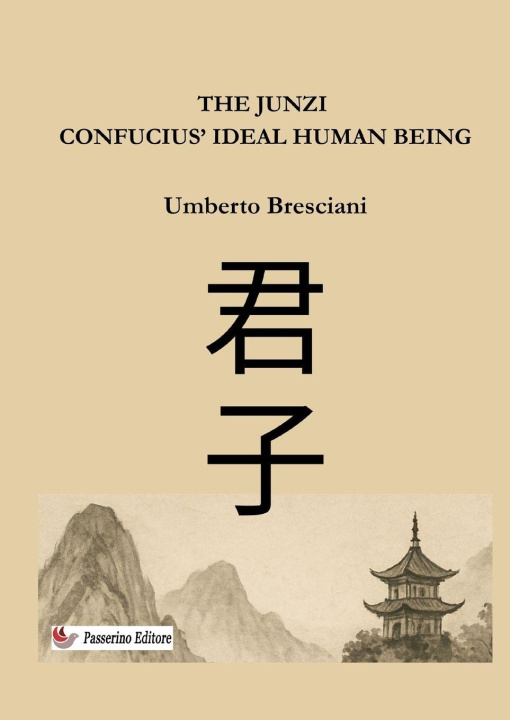
The Junzi - Confucius' ideal human being
 Inglés
 54 b
54 b
Hasta 30 días para devoluciones
Clientes que también han comprado




 /
/
 Tapa blanda
 28.79
€
28.79
€




It is a deeply rooted habit among the Chinese to divide people into two categories: the junzi (gentlemen, decent people, those with a sense of justice, noble-spirited men) and the xiaoren (petty men, mean-spirited individuals who look only to personal profit and never to the common good). This habit, too, is a legacy of Confucius, who transformed the meaning of these two labels.
The term junzi — rendered kunshi in Japanese, kwunca in Korean, and quân tử in Vietnamese — already existed before Confucius, and its original meaning was simply to indicate a person’s social status. As a social designation, junzi meant “son (zi) of a feudal lord (jun)” or of an aristocrat, and thus a member of the noble class that governed under that system. In Confucius’s time, society was divided into two classes: the junzi (the aristocrats) and the xiaoren (the common people, the masses).
The original meaning occasionally resurfaces in the Analects, as we will point out in due course. But in most cases, the term is used with a different sense. Confucius transformed it into a moral qualification: from “son of a feudal lord (or an aristocrat)” to “a person who has the ideal qualities of a feudal lord or an aristocrat.”
From a social qualification (“noble man by blood”) to an ethical one (“noble man by spirit”).
The junzi is, according to Confucius, the ideal human being.
Naturally, its opposite, the xiaoren, then does not (in most cases) mean someone of humble social origin, but rather a petty, selfish man, unable to see beyond his own narrow personal interests. As we will see, the junzi of Confucius is not a hereditary condition; it is an ideal of life, a goal to be achieved, which any person may aspire to, not just those of noble birth.
The descriptions Confucius gives us of the personality of the junzi, or conversely the xiaoren, are in fact his definitions of the ideal human being — how, in his view, a person worthy of the name “human” should or should not behave.
Umberto Bresciani
1942 Born in Ca’d’Andrea, Cremona, Italy.
1962 High School Graduate (Maturità Classica), Liceo Ballerini, Seregno (MI), Italy.
1968 Licentiate of Philosophy & Theology, Studentato Teologico Saveriano, Parma, Italy.
1969 Entered Chinese Language Institute (Annexed to Fujen University, Taipei, Taiwan).
1973 B.A. (major: History; minor: Chinese Studies), University of Maryland (U.S.A.), Far East Division.
1975 M.A. Chinese Literature, National Taiwan University, Taipei, Taiwan.
1983 Ph. D. Chinese Literature, National Taiwan University, Taipei, Taiwan.
Professor of Italian Language: National Taiwan Normal University, Taipei (since 1974).
Professor, Dept. of Italian Language & Culture, Fujen University, Xinzhuang, Taipei, Taiwan (since 2003).
Umberto Bresciani has lived in Taiwan for over 40 years.
His main interest is Chinese philosophical and religious thought and comparative theological studies.
Main publications
Books:
Xifang hanxuejia yanjiu wenshidongyi de shangdui (Evaluation of research by Western sinologists on the Wenshidongyi), dissertation for the Ph.D., Chinese Literature, Taipei: National Taiwan University, May 1983.
Reinventing Confucianism: The New Confucian Movement, Taipei: Ricci Institute, 2001.
La filosofia cinese nel ventesimo secolo – I nuovi confuciani, Roma: Urbaniana University Press, 2009.
Il primo principio della filosofia confuciana, Gaeta: Passerino Editore, 2014.


Sobre el libro
Inglés

Regale este libro hoy
Es fácil
1 Añadir al carrito y elegir Entregar como regalo en el checkout 2 Le enviaremos un vale 3 El libro llegará a la dirección del destinatarioTambién puede interesarle

 /
Tapa blanda
15.79
€
/
Tapa blanda
15.79
€