
 Contacto
 Cómo comprar
Entrega
Guía de compras
 Inglés
 54 b
54 b
Política de devolución de 30 días

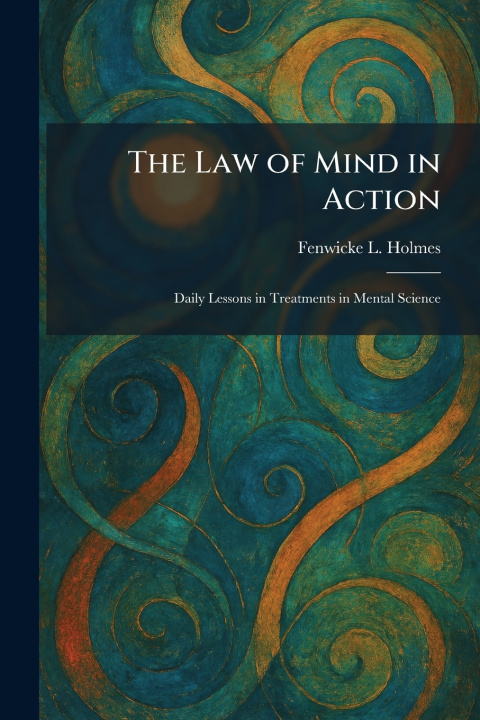
"The Law of Mind in Action" is a foundational guide to the principles of New Thought and mental science, designed to provide readers with a practical framework for spiritual and personal transformation. Written by Fenwicke L. Holmes, a prominent figure in the metaphysical movement, this work presents a series of daily lessons and treatments aimed at harnessing the power of the mind to manifest health, prosperity, and happiness. Through a systematic approach, Holmes explains the metaphysical laws governing human experience and offers clear instructions on how to align one's thinking with the Infinite Mind.
The text serves as both a philosophical treatise and a manual for daily living. It explores vital concepts such as the creative power of thought, the importance of faith, and the specific technique of mental treatment-a form of affirmative prayer used to shift consciousness and achieve tangible results. Each lesson is carefully crafted to guide the student through the complexities of spiritual law with clarity and depth. "The Law of Mind in Action" remains a significant contribution to the literature of mental healing and personal development, offering timeless wisdom for anyone seeking to understand the profound connection between thought and the external world.
This work has been selected by scholars as being culturally important, and is part of the knowledge base of civilization as we know it. This work was reproduced from the original artifact, and remains as true to the original work as possible. Therefore, you may see the original copyright references, library stamps (as most of these works have been housed in our most important libraries around the world), and other notations in the work.
This work is in the public domain in the United States of America, and possibly other nations. Within the United States, you may freely copy and distribute this work, as no entity (individual or corporate) has a copyright on the body of the work.
As a reproduction of a historical artifact, this work may contain missing or blurred pages, poor pictures, errant marks, etc. Scholars believe, and we concur, that this work is important enough to be preserved, reproduced, and made generally available to the public. We appreciate your support of the preservation process, and thank you for being an important part of keeping this knowledge alive and relevant.


Sobre el libro
Inglés
