
 Contacto
 Cómo comprar
Entrega
Guía de compras
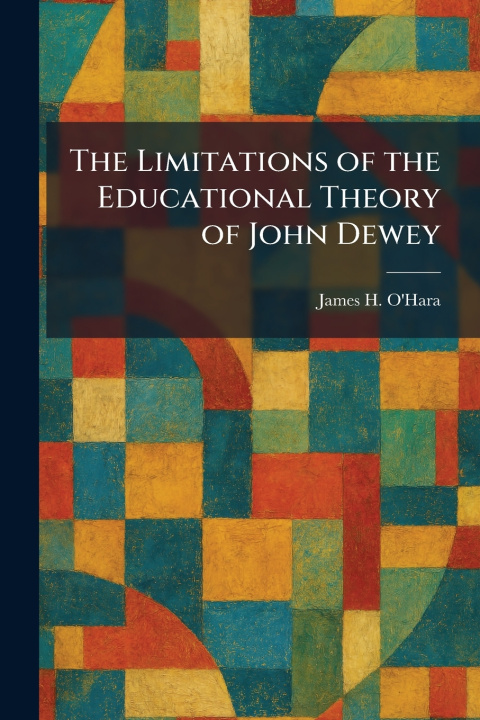
The Limitations of the Educational Theory of John Dewey
 Inglés
 47 b
47 b
Política de devolución de 30 días

"The Limitations of the Educational Theory of John Dewey" offers a rigorous critical analysis of the philosophical foundations and practical applications of John Dewey's pedagogical framework. Written during a pivotal era of academic reform, this scholarly investigation examines the core tenets of progressive education and the pragmatic philosophy that defined modern teaching in the early 20th century. James H. O'Hara meticulously evaluates the boundaries of Dewey's approach, questioning its theoretical consistency and its long-term implications for the American school system.
The work explores the intricate relationship between experience, social progress, and the classroom environment, providing a counter-perspective to the then-dominant trends in educational thought. By scrutinizing the objectives of the school as a social institution, O'Hara contributes to a deeper understanding of the debates that have shaped contemporary educational policy. This text is an essential resource for historians of education and students of philosophy, offering a valuable historical perspective on the evolution of teaching methods and the critiques of instrumentalist thought. "The Limitations of the Educational Theory of John Dewey" remains a significant document for those seeking to understand the diverse intellectual landscape of educational theory.
This work has been selected by scholars as being culturally important, and is part of the knowledge base of civilization as we know it. This work was reproduced from the original artifact, and remains as true to the original work as possible. Therefore, you may see the original copyright references, library stamps (as most of these works have been housed in our most important libraries around the world), and other notations in the work.
This work is in the public domain in the United States of America, and possibly other nations. Within the United States, you may freely copy and distribute this work, as no entity (individual or corporate) has a copyright on the body of the work.
As a reproduction of a historical artifact, this work may contain missing or blurred pages, poor pictures, errant marks, etc. Scholars believe, and we concur, that this work is important enough to be preserved, reproduced, and made generally available to the public. We appreciate your support of the preservation process, and thank you for being an important part of keeping this knowledge alive and relevant.


Sobre el libro
Inglés
