
 Contacto
 Cómo comprar
Entrega
Guía de compras
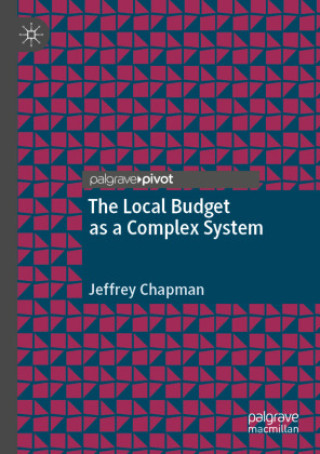
The Local Budget as a Complex System
 Inglés
 143 b
143 b
Hasta 30 días para devoluciones
Clientes que también han comprado





 /
/
 Tapa blanda
 30.19
€
30.19
€






This book examines budgeting by analyzing the local government budget as a complex system, thus adding a new dimension to traditional budget textbooks. It is designed to complement existing texts-not replace-by putting the budget in a complex system, general equilibrium framework. A complex systems framework adds to conventional budget analysis in at least four ways: It looks at the budget as the result of many variables that are outside the finance department's purview; it understands that there are multiple interdependences among these variables; it suggests analysis of non-obvious relationships among actions in the budget process in order to optimize results; and it argues that the actors in the process must understand that their budgetary behaviors have indirect and far-reaching implications that go beyond the budget document. This book also uses concepts seldom discussed in the budgetary literature-that of governance, including concepts of the facilitative state, with adjustments for exogenous shocks; the forms of decision making; and the political climate of the jurisdiction. This framework notes methods of success of firms in the private sector that operate in environments of rapid technological change. While becoming a popular theoretical framework for how private sector firms change, dynamic capability analysis has received little attention in the public management field. This book utilizes DC since public sector organizations also face rapidly changing environments. Lastly, the book discusses the potential relationship between the local budget and local community welfare maximization.


Sobre el libro
Inglés

Regale este libro hoy
Es fácil
1 Añadir al carrito y elegir Entregar como regalo en el checkout 2 Le enviaremos un vale 3 El libro llegará a la dirección del destinatarioTambién puede interesarle

 /
Tapa dura
244.19
€
/
Tapa dura
244.19
€








 /
Tapa blanda
39.39
€
/
Tapa blanda
39.39
€







¡Hola! Soy Libroamiko, tu asesor de libros.
¿Cómo puedo ayudarte?