
 Contacto
 Cómo comprar
Entrega
Guía de compras
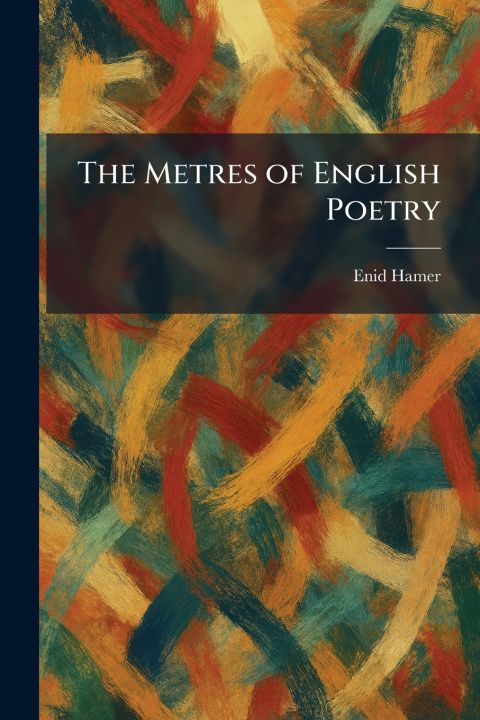
The Metres of English Poetry
 Inglés
 63 b
63 b
Política de devolución de 30 días

"The Metres of English Poetry" is a comprehensive and scholarly examination of the structural foundations of English verse. Written by Enid Hamer, this classic work offers a detailed analysis of prosody, exploring the rhythmic patterns and metrical systems that have shaped English poetry throughout its history.
The book delves into the mechanics of versification, covering essential topics such as blank verse, heroic couplets, sonnet structures, and various stanzaic forms. Hamer provides a systematic approach to understanding how rhythm and meter contribute to the emotional and aesthetic impact of a poem. Through careful scansion and illustrative examples from major poets, the text clarifies the evolution of poetic techniques and the creative possibilities within traditional frameworks.
This work serves as an invaluable resource for students of literature, aspiring poets, and anyone interested in the technical artistry of the written word. It remains a foundational text for those seeking to master the complexities of English meter and gain a deeper appreciation for the musicality of the language.
This work has been selected by scholars as being culturally important, and is part of the knowledge base of civilization as we know it. This work was reproduced from the original artifact, and remains as true to the original work as possible. Therefore, you may see the original copyright references, library stamps (as most of these works have been housed in our most important libraries around the world), and other notations in the work.
This work is in the public domain in the United States of America, and possibly other nations. Within the United States, you may freely copy and distribute this work, as no entity (individual or corporate) has a copyright on the body of the work.
As a reproduction of a historical artifact, this work may contain missing or blurred pages, poor pictures, errant marks, etc. Scholars believe, and we concur, that this work is important enough to be preserved, reproduced, and made generally available to the public. We appreciate your support of the preservation process, and thank you for being an important part of keeping this knowledge alive and relevant.


Sobre el libro
Inglés
